
Have you ever asked yourself, “Could getting a Russian Blue cat keep my allergies at bay?”
If you’re thinking about bringing a Russian Blue cat into your home and you’re worried about allergies, consider this. The main cause of cat allergies is a protein called Fel d 1. It’s in their saliva, dander, and other body fluids. Although no cat is completely allergy-free, Russian Blues make less Fel d 1 due to their genes. This makes them almost hypoallergenic. So, they might cause fewer allergy problems than most breeds.
It’s also important to take some steps if you decide to bring a Russian Blue home. Keeping your house clean, grooming the cat often, and feeding it well can lower the risk of allergic reactions.
Key Takeaways
- The Fel d 1 protein is the main cause of cat allergies in humans.
- Russian Blue cats produce lower levels of Fel d 1, making them nearly hypoallergenic.
- No cat breed is entirely free of allergens.
- Regular grooming and maintaining a clean environment can help reduce allergen exposure.
- A nutritious diet contributes to reducing allergens in Russian Blue cats.
Introduction to Russian Blue Cats
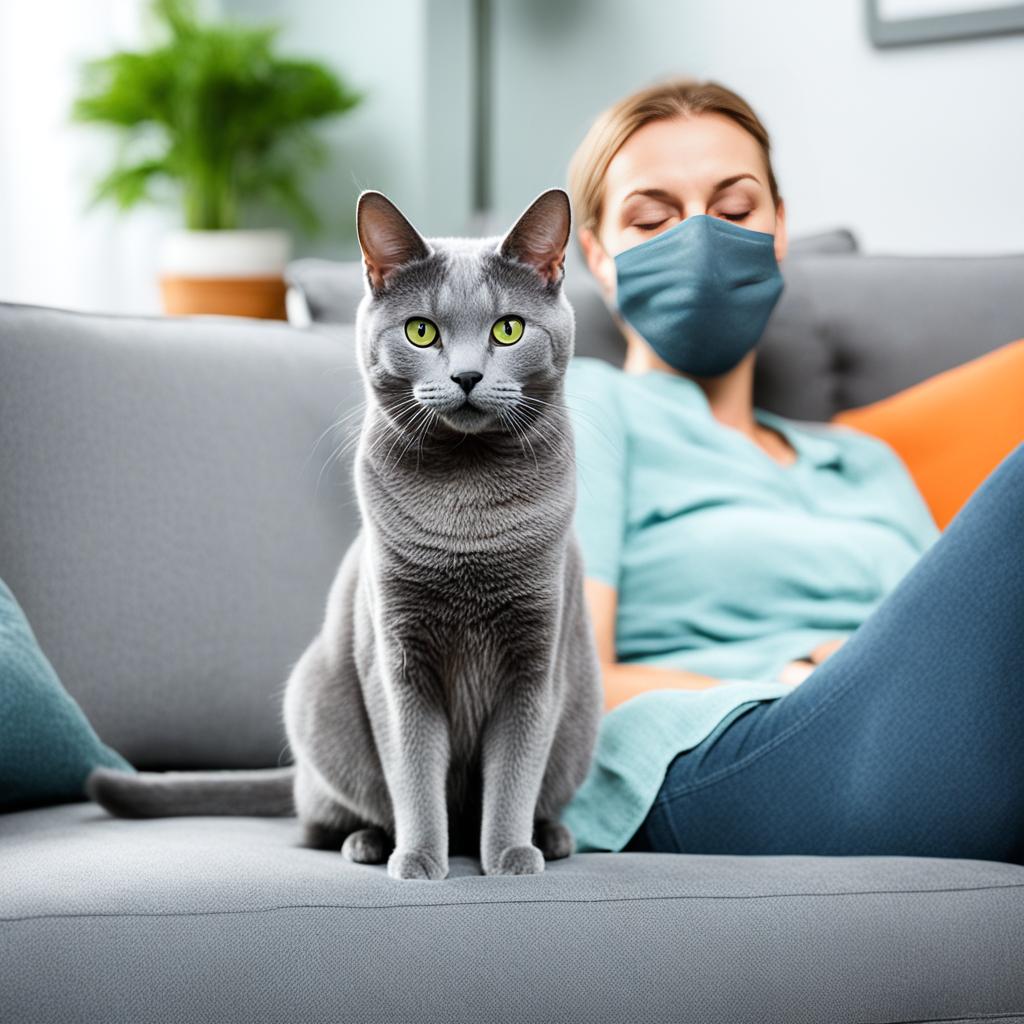
If you need a cat that’s good for allergies, the Russian Blue is a top pick. They are famous for their bright green eyes and soft silver-blue fur. Their mix of grace and beauty is truly captivating.
History and Origin
The story of the Russian Blue cat is full of mystery and excitement. It’s said they were the favorite pets of Russian czars. Though the tales about their start are more legend than fact, most people agree they began in the 19th century.
This was due to the efforts of breeders in Russia and Scandinavia.
Physical Traits and Appearance
Exploring the Russian Blue’s features is a treat. They start with yellow eyes that turn a beautiful emerald green as they grow. Their double coat is not just for looks. It helps keep them warm and gives them a larger appearance.
“A Russian Blue’s coat is as soft as it looks, and brushing it can feel like you’re running your fingers through a plush toy.”—PetExpert Magazine
Besides their soft fur, Russian Blues have a unique look. They have a wedge-shaped head, big ears, and a straight nose. This makes them look both sleek and adorable. The fact they’re hypoallergenic only adds to their appeal.
If you love a cat that’s both beautiful and easy on allergies, the Russian Blue is a great choice. Keep reading to learn more about these special cats.
Understanding Cat Allergies

Ever pet a cat and start sneezing? Cat allergies are often caused by proteins. These proteins, like Fel d 1 and Fel d 4, come from cats’ skin, saliva, and dander. Let’s look into how these allergens impact us.
Common Allergens in Cats
Fel d 1 and Fel d 4 are common allergens in cats. They are found in cats’ fur and on their faces. These proteins are pretty sneaky, causing allergic reactions without us knowing.
“The cleanliness of cats is an instinctive trait, but ironically, it also means they spread allergens more efficiently through their grooming habits.”
Fel d 1 Protein and Its Effects
Fel d 1 is seen as the top cause of cat allergies. Some cats, like Russian Blues, produce less Fel d 1. This makes them better for those with allergies. However, no cat breed is completely allergy-free.
If you’re thinking about getting a cat, spend time with the breed first. This helps you see how you react. Choosing carefully can lead to a happy, allergy-symptom-free pet experience.
Are Russian Blue Cats Hypoallergenic?

Russian Blue cats are not fully hypoallergenic, yet they stand out. They are known to produce less of the Fel d 1 protein. This protein is a major cause of cat allergies. So, they might be a better choice for those with allergies.
Fel d 1 Production in Russian Blue Cats
Russian Blues produce less of the Fel d 1 protein. This protein, found in their saliva and skin, triggers allergies. Their lower production means they are friendlier for allergy sufferers.
Comparison with Other Breeds
Compared to some popular breeds, Russian Blues have lower Fel d 1 levels. This makes them a better choice for those looking for pet allergy solutions. But, remember, everyone’s reaction is different.
| Cat Breed | Fel d 1 Production Level | Suitability for Allergy Sufferers |
|---|---|---|
| Russian Blue | Low | High |
| Maine Coon | High | Low |
| Ragdoll | High | Low |
| Persian | High | Low |
Characteristics of Russian Blue Cats
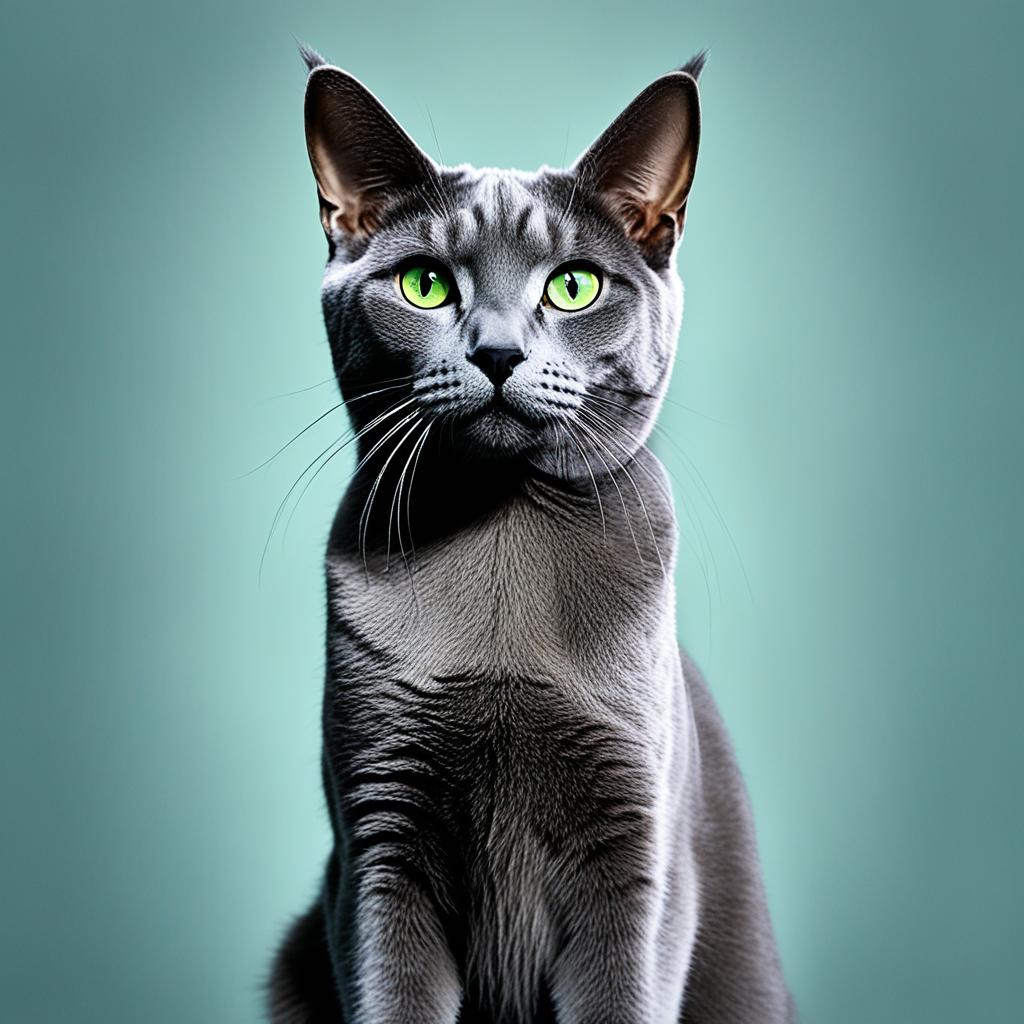
Russian Blue Cats are famous for being best cats for allergies. Their stunning blue-silver coat catches everyone’s eye. But, it’s not just their look that’s special.
Temperament and Personality
These cats are loving and friendly. They tightly bond with a favorite human while also being kind to others. Their smart behavior shows in how they learn quickly and stick to a routine.
They love fun games and like to talk with people. This chatting is both cute and entertaining.
Behavioral Traits
Even though they’re independent, Russian Blue cats show a lot of love to their families. They’re not needy but enjoy simple signs of affection. They prefer a steady daily routine.
Known as the best cats for allergies, they’re both independent and caring. These cats are the perfect mix of being self-reliant yet loving.
Living with Russian Blue Cats Despite Allergies
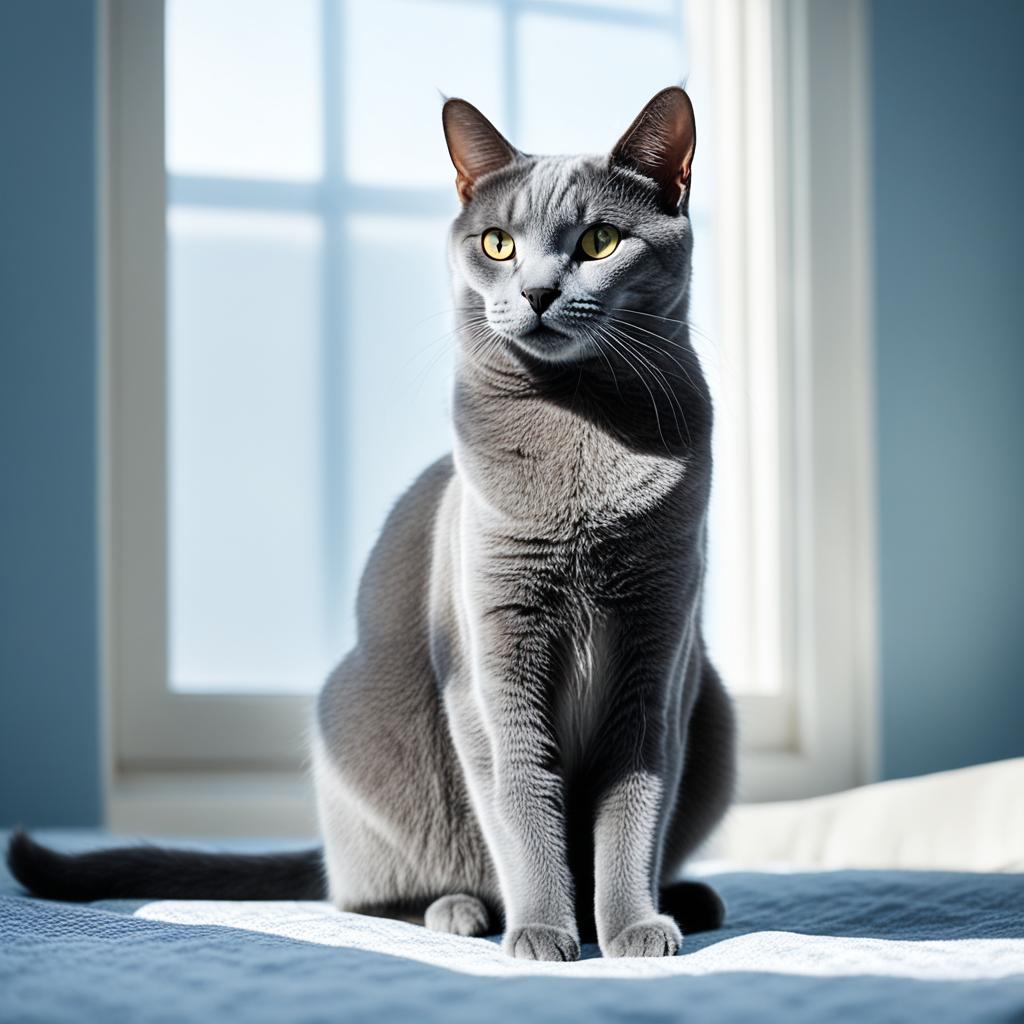
Living with a Russian Blue cat when you have allergies can be done. You just need the right precautions. This includes both personal habits and keeping the living space free of allergens.
Personal Precautions
Change a few habits to lower the risk of allergies. It helps to teach your Russian Blue cat not to lick. Also, make sure not to touch your face after petting them. Always wash your hands right after. It’s even better if someone else can handle cleaning the litter box.
Environmental Safety Measures
For a truly cozy space, keep it clean from allergens. Use HEPA filters to catch allergens in the air. Choose a litter that isn’t dusty to contain the mess. Clean your house often, especially where your cat likes to be.
If allergies get too bad, have some antihistamines or an epinephrine auto-injector ready. These Pet Allergy Solutions can really help reduce the symptoms you feel.
- Personal hygiene habits like hand washing
- Utilizing HEPA filters and dust-free litter
- Clean your cat’s belongings regularly
- Keep emergency medications handy
| Precaution | Benefit |
|---|---|
| Training cat not to lick | Reduces direct exposure to allergens |
| Delegating litter management | Minimizes contact with cat waste |
| Using HEPA filters | Filters airborne allergens |
| Keeping antihistamines handy | Immediate relief from allergy flare-ups |
Grooming Tips for Minimizing Allergens

It’s key to keep your Russian Blue cat clean for their health. This also reduces allergens in your home.
Brushing and Bathing
Brush your cat often, especially when they shed. Use slicker brushes or grooming gloves to get rid of loose hair and dander. A bath with a special, non-allergenic shampoo can also help.
Special Grooming Products
Use special grooming items for your Russian Blue. Hypoallergenic shampoos and conditioners help. So do grooming masks and special gloves for cleaning. Get their teeth cleaned and coats groomed often by a professional to keep allergens down.
| Grooming Activity | Frequency | Recommended Products |
|---|---|---|
| Brushing | Several times a week | Slicker Brush, Grooming Gloves |
| Bathing | Monthly or as needed | Hypoallergenic Shampoo |
| Dental Cleaning | Weekly | Cat Dental Kits |
| Professional Groomer Visits | Every 3-4 months | Varied Services |
Nutrition and Its Role in Allergen Management

Making sure your cat eats well is key for dealing with allergens. It’s important to include the right nutrients. This helps lower allergen levels, making your home more comfortable for everyone.
High-Protein Diet and Skin Health
A high-protein diet is vital for your Russian Blue to be a allergy-friendly cat. Proteins are crucial for skin and coat health. A shiny coat means less fur and dander floating around.
Choose proteins like chicken, turkey, or fish. This keeps the coat strong and close to the skin.
Recommended Nutrients and Foods
Besides proteins, some nutrients are key for good skin and less allergens. Omega-3 fatty acids and vitamin E help keep your cat’s coat in top shape. They support good health too.
Try to include these nutrients from wet foods. Wet foods are great for hydration and nutrition. A diet rich in these nutrients will make your hypoallergenic cat more joyful. It also helps reduce potential allergy problems.
| Essential Nutrients | Recommended Foods |
|---|---|
| High-quality Proteins | Chicken, Turkey, Fish |
| Omega-3 Fatty Acids | Salmon, Trout, Flaxseed |
| Vitamin E | Spinach, Sweet Potatoes, Eggs |
It’s vital to make sure your Russian Blue’s diet includes these important nutrients. This helps keep their skin and coat healthy. It also makes the environment better for those with allergies.
Best Cats for Allergy Sufferers
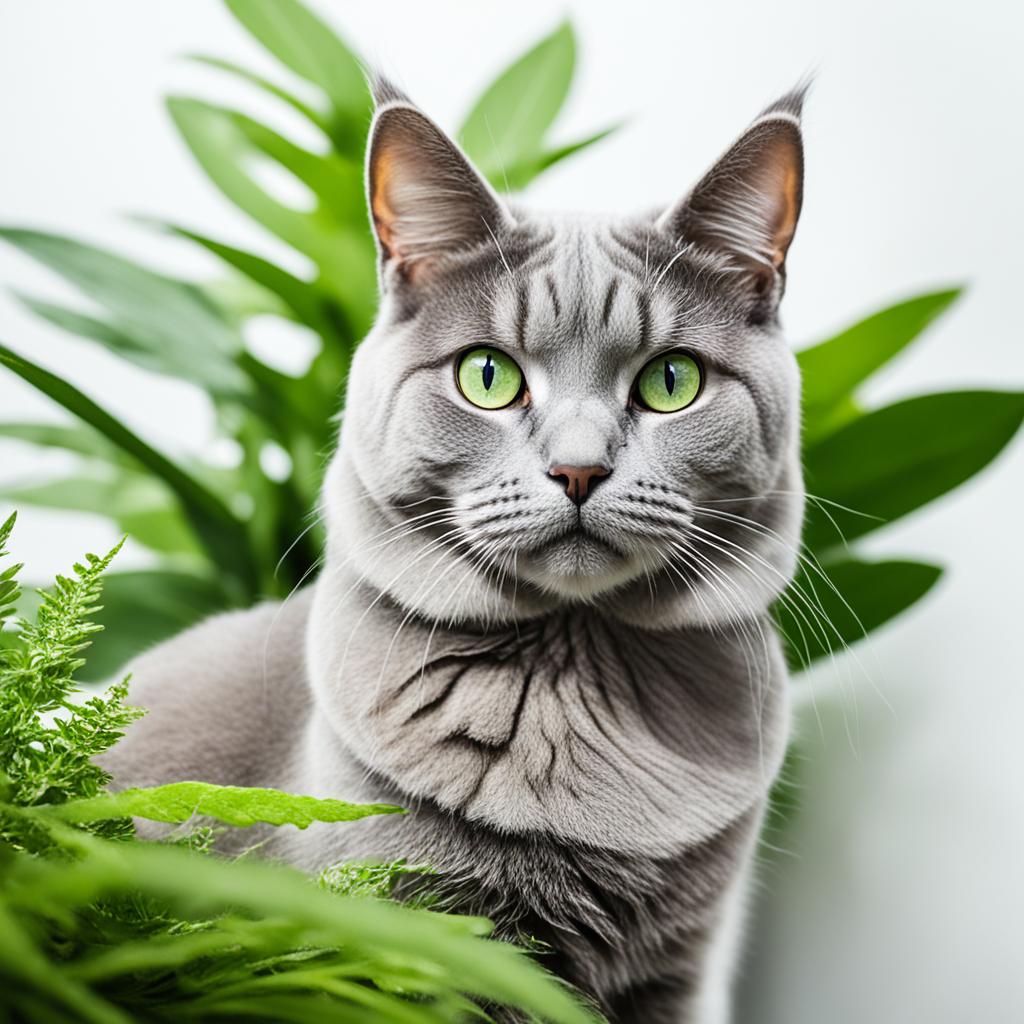
Looking for a cat that’s allergy-friendly means knowing your breeds. Russian Blues stand out, but other cats are great too. You should check what they’re like with making allergies and how much care they need.
Comparison of Hypoallergenic Cat Breeds
Some cats are known for not triggering as many allergies. It’s good to compare them in terms of how much they shed, what care they need, and their effect on allergies:
| Breed | Grooming Needs | Shedding | Allergen Levels |
|---|---|---|---|
| Russian Blue | Moderate | Low | Lower Fel d 1 |
| Sphynx | High (Regular bathing) | None | Low due to lack of fur |
| Cornish Rex | Low | Low | Moderate |
| Siberian | Moderate | Moderate | Lower Fel d 1 |
Traits Making Breeds Hypoallergenic
So, what gives certain cats their allergy-fighting edge? It’s a mix of making less of the Fel d 1, and unique coats. Here’s what sets them apart for people with allergies:
- Less Fel d 1 Production: Breeds like the Siberian and Russian Blue naturally produce less of this allergen.
- Coat Type: The Cornish Rex and Sphynx have unique coats or lack thereof, reducing the spread of dander.
- Grooming Habits: Regular grooming routines can help minimize allergen spread in all hypoallergenic cat breeds.
Pet Allergy Solutions
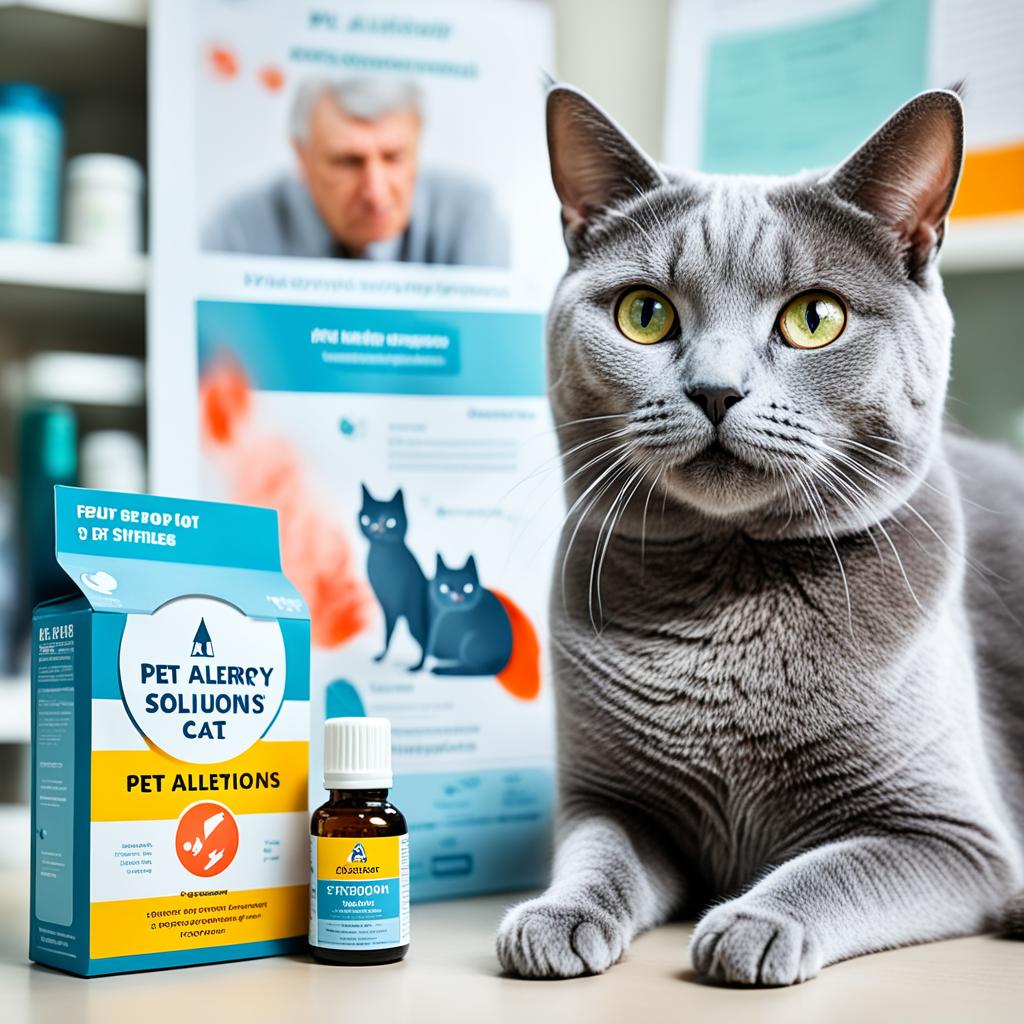
Handling pet allergies needs a smart plan. You don’t want to keep sneezing. There are many ways to fight Pet Allergy Problems. You can choose from many Pet Allergy Solutions. These options help you live better with your pet.
Medications and Treatments for Allergies
There are lots of medications for pet allergies. Each one helps with different symptoms. For instance, Benadryl is great for quick relief. It tackles common allergic reactions. Flonase, a nasal steroid, fights inflammation and congestion. Allergy shots, on the other hand, can change the game. They help you get used to allergens over time. This can make a big difference in your life.
Home Remedies and Natural Solutions
Some people like to manage their pet allergies naturally. There are helpful home remedies. Like using saline rinses to clean your nose. Keeping your home super clean is key too. Regular vacuuming and air filters help a lot. Also, some find comfort in essential oils like eucalyptus. These Allergy-friendly Cats tips work well alongside medical treatments.
Deciding between meds and home solutions is up to you. But it’s important to always be ready. Especially if your allergies are severe. By using the right strategies, you can make your home a welcome place for both pets and people.
Tips for First-Time Russian Blue Owners
Welcoming a Russian Blue into your home is thrilling. These elegant felines have unique traits that stand out. They are often considered one of the Best Cats for Allergies. Knowing these tips will help make your new pet’s transition smooth and keep them happy.
Adaptation and Socialization Tips
Creating a peaceful welcome is important for your Russian Blue. They might take a while to feel at home, so be patient. Introduce them slowly to others in your home. Allow them to bond at their own pace.
This approach helps enhance their special bond with you. It also highlights why they are great for those with allergies.
Routine and Daily Care
Setting a regular daily routine is crucial for your cat and allergy management. Ensure they have set feeding and play times. Since Russian Blues love being clean, keeping their space tidy is a must. This also helps with your home’s allergy control.
Conclusion
Choosing a pet for someone with allergies means knowing about cat allergens. The Russian Blue cat is a good choice because it makes less Fel d 1 protein. With the right care, people with allergies can live with them easily.
To reduce allergens, keeping the cat clean and your house tidy really helps. The Russian Blue is a top choice for allergy sufferers. They can have this beautiful cat without too much trouble.
Before picking a Russian Blue, spend time with one to see how your body reacts. This helps you make a smart choice. With proper care, the Russian Blue can be the perfect cat for you. They offer years of joy to their owners.
FAQ
Are Russian Blue Cats Hypoallergenic?
Russian Blues are not fully hypoallergenic. But, because they produce lower levels of a certain protein, they may cause fewer allergies. This makes them a better option for those sensitive to cats.
What are the physical traits of Russian Blue Cats?
These cats stand out with their bright green eyes and silvery blue fur. They have a muscular build but look very slim. Their eyes change from yellow to green as they grow older.
What are the common allergens in cats?
How do Russian Blue Cats compare with other breeds in terms of allergens?
Compared to breeds like Maine Coons, Ragdolls, and Persians, Russian Blues produce less Fel d 1. This makes them a better choice for people with cat allergies.
What is the temperament of Russian Blue Cats like?
Russian Blue Cats are known for being gentle and loyal. They often choose one family member to bond with closely. Their intelligence and playfulness are also standout features.
What personal precautions can I take to reduce allergen exposure?
What grooming tips help minimize allergens in Russian Blue Cats?
Regular brushing and using special shampoos can help reduce dander. Keeping a strict grooming schedule is important. Pro grooming services are also a good option.
How does nutrition affect allergen levels in Russian Blue Cats?
A diet high in protein, Omega-3, and vitamin E improves their coat and skin. This lowers the amount of dander and allergens they produce.
What other cat breeds are considered hypoallergenic?
Breeds like the Sphynx, Cornish Rex, and Siberian are considered because of their special coats or less Fel d 1. They might be better for people with allergies.
What medications and treatments are available for cat allergies?
To reduce cat allergy symptoms, some options are antihistamines and nasal steroids. Allergy shots can also be effective. Natural methods like saline rinses and a clean home work well too.


