
Ever thought about whether Russian Blue cats and dogs can get along? Many people think cats and dogs are always foes. But, is there a way to peacefully mix these pets?
Russian Blue cats are known for being both independent and calm, making them good candidates for living with some dog breeds. If you or someone in your home has allergies, their hypoallergenic fur could be a big plus. It’s important to know the unique traits of your Russian Blue, especially in how they might interact with small dogs like Chihuahuas. This knowledge is key to making your home a peaceful place for both pets.
Key Takeaways
- Russian Blue cats tend to be independent and less hyperactive.
- Smaller dog breeds, like Chihuahuas, may get along well with Russian Blue cats.
- Hypoallergenic properties of Russian Blue cats can be beneficial in multi-pet households.
- Individual temperament and past experiences play a significant role in pet compatibility.
- Proper introduction and positive reinforcement are key to successful cohabitation.
Understanding Russian Blue Cat Behavior
Russian Blue cats stand out because of their unique traits. Their behavior and personality make them special. Let’s look into what makes these cats tick.
Characteristics and Temperament
Russian Blues usually act calm around dogs. They are known for being sweet but also a bit reserved. This makes them good at living with other pets. Still, they love to play when they feel like it.
Activity Levels and Energy
Russian Blue cats are not too energetic. They like to play but also enjoy quiet time. They will play with dogs that match their energy well. Providing toys and games is key to keep them happy.
Social Preferences and Independence
Russian Blues like to be alone at times, but they do enjoy the right company. With proper introductions, they can get along with dogs. It’s about finding the right balance and staying patient as they build their friendships.
Common Traits of Dogs That Get Along Well with Cats

Choosing a dog that will live well with cats takes some study. The American Kennel Club has shown that Non-Sporting and Sporting dogs have different traits related to living with cats. These traits can either help or hinder their friendships with cats.
Non-Sporting Dogs vs. Sporting Dogs
Non-Sporting dogs like Bulldogs and Poodles don’t have a strong hunting urge. So, they are less likely to bother cats. They are often friendly and enjoy relaxing or playing gently, which can work well with cats.
Sporting dogs, however, like Retrievers and Spaniels, are full of energy and like to chase. Their love for chasing might not mix well with cats. But, with the right training and careful introductions, they can learn to live with cats in harmony.
Small Breeds vs. Large Breeds
Dog size can affect their friendship with cats. Small dogs like Chihuahuas and Yorkshire Terriers can get along with cats because of their size and similar play. But, their small size means they might need extra protection to feel safe.
Then, we have large dogs, for example, Great Danes or Labradors. Their big size might look scary, but their easy-going nature often means they can be friends with cats. These big dogs usually are calm, which helps in harmonious living with cats.
In the end, knowing the characteristics of various dog breeds and sizes can help in having a happy multi-pet home. Finding dogs that match well with cats is all about choosing those with the right friendly, calm, and play styles.
Can Russian Blue Cats Live with Dogs?
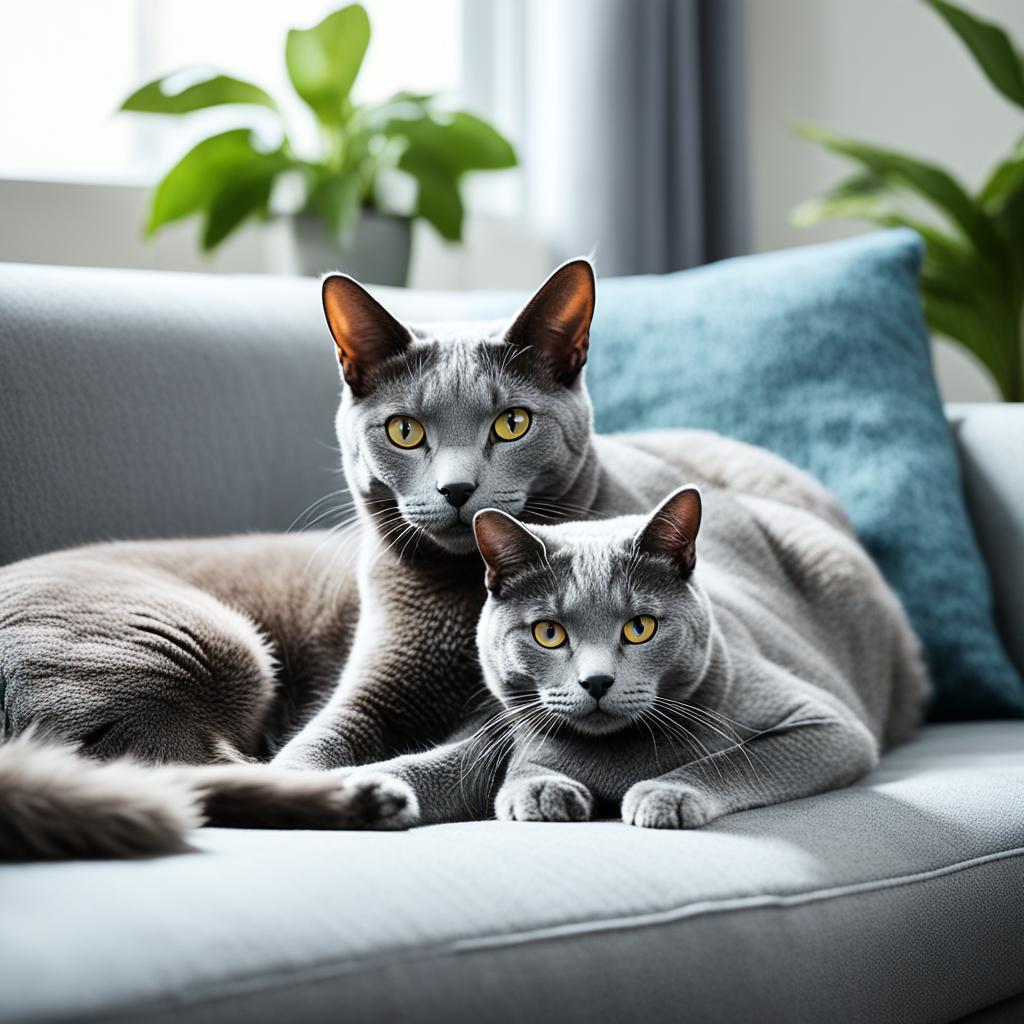
Thinking about letting a Russian Blue cat live with a dog? You need to keep some things in mind. While history may talk of fights, pets today have changed a lot.
The most important thing is how each animal acts. Just like people, Russian Blue cats and dogs can have different personalities. It really helps if your cat met dogs when they were young.
Patience is key here. It takes time to get pets used to each other. They need to learn how to communicate and share space.
Also, think about allergies. Some people need hypoallergenic pets like the Russian Blue. Its coat doesn’t shed much, making it a good choice for multi-pet households. But, introducing pets slowly is very important.
Being a good owner is crucial for peace at home. It’s all about paying attention to what your pets need. If you do this right, Russian Blue cats can live with dogs.
How to Introduce a Russian Blue Cat to a Dog
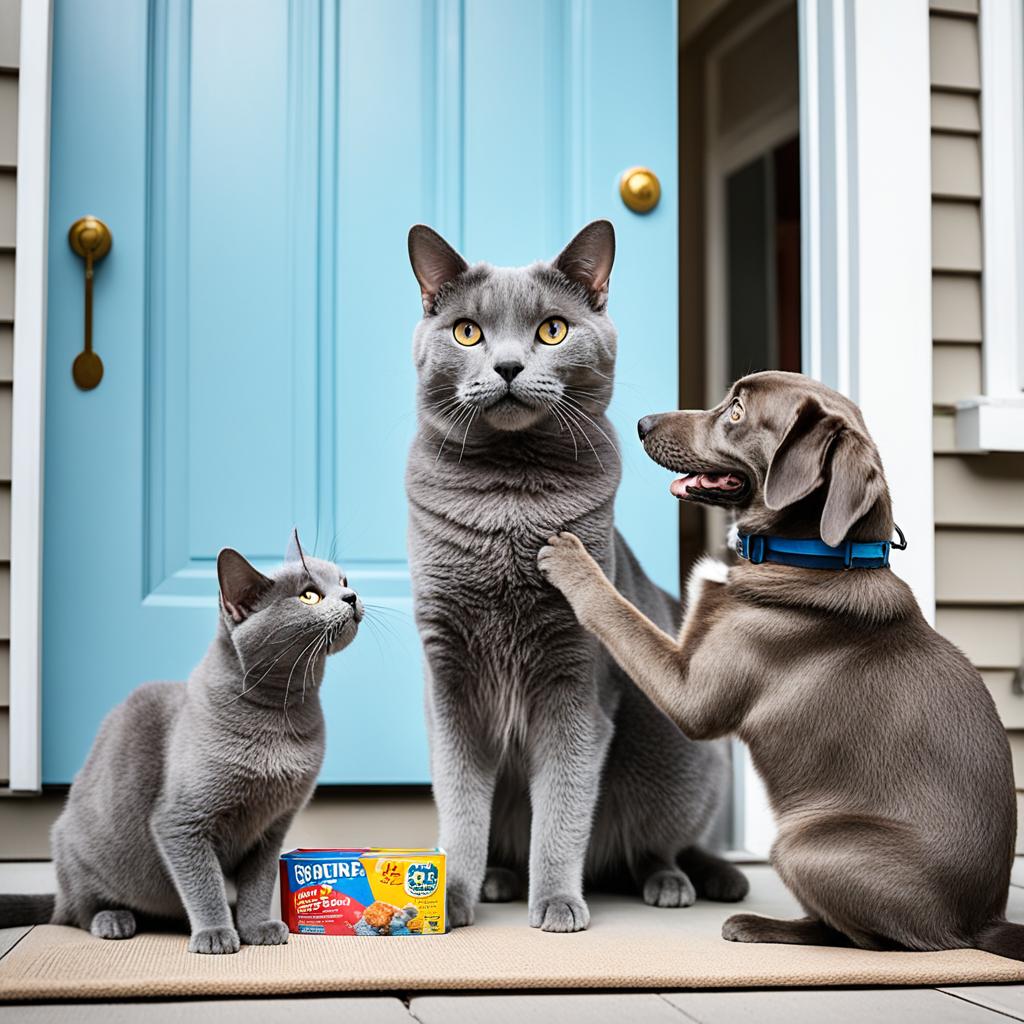
Getting a Russian Blue cat and a dog to be friends needs careful planning. The right steps and smart strategies make it possible. Your pets could end up as best friends with a little work.
Pre-Introduction Preparations
Starting the adventure of introducing a Russian Blue cat to a dog means getting ready first. It’s key to have a few things set up. You need to have separate spaces for them at first. Crates, gates, and special rooms are great for this. They let each pet have their safe area. This helps avoid stress. Trust us, this preparation can make things a lot easier later.
Controlled Meetings and Positive Reinforcement
Now, it’s time to start the process. Begin with meetings where they can see each other but are safe. Use leashes or barriers to keep things under control. Gradually, make these times longer. This helps them get used to each other.
Remember to use positive reinforcement techniques too. Give both pets treats and praise for being calm. This makes them like each other more. Keep up with the rewards until they are happy being together. Consistency is important.
Compatibility Factors: Russian Blue Cat and Dog Breeds

Several important factors can make sure Russian Blue cats and dogs live well together. Knowing these keys can help keep peace at home for all.
Hypoallergenic Companions
For those with allergies, choosing hypoallergenic pets is smart. Russian Blue cats and some dogs, like Poodles and Shih Tzus, are hypoallergenic. This means less stress for those with allergies and improved comfort for all.
Temperament Compatibility
Finding the right temperament match is key between Russian Blue cats and dogs. Russian Blues are calm, so they do well with dogs of a similar nature like Cavalier King Charles Spaniels or Bichon Frises. These dogs are also easy-going, fitting well with Russian Blues.
Knowing about Russian Blue cat compatibility with dogs helps choose the best dog friend. This ensures peace and harmony in the home.
| Hypoallergenic Dog Breeds | Traits Matching with Russian Blue Cats |
|---|---|
| Poodle | Calm, Intelligent, Hypoallergenic |
| Shih Tzu | Friendly, Adaptable, Hypoallergenic |
| Cavalier King Charles Spanii | Gentle, Affectionate, Non-confrontational |
| Bichon Frise | Playful, Sociable, Non-confrontational |
Signs of Successful Cohabitation Between Russian Blue Cats and Dogs

Bringing a Russian Blue cat and a dog into the same home can be very rewarding. Knowing what to look for can show if they are living well together. Watch how they behave and interact closely to see if they are comfortable and respectful of each other.
Observing Body Language
Looking at their body language helps you know how they feel. A cat that’s comfortable will have a calm, non-fluffed tail and ears at ease. A dog will wag its tail, stay relaxed, with ears in a rested position. These small signs tell you a lot about their relationship.
Peaceful Coexistence Indicators
Seeing them avoid fights is good, but seeing them enjoy each other’s company is even better. When they groom each other, it shows trust. If they sleep near each other, it proves they find safety in their bond. Playing without aggression is a great indicator as well. When they keep calm around each other, it’s a clear sign of successful living together.
Challenges You May Face and How to Overcome Them
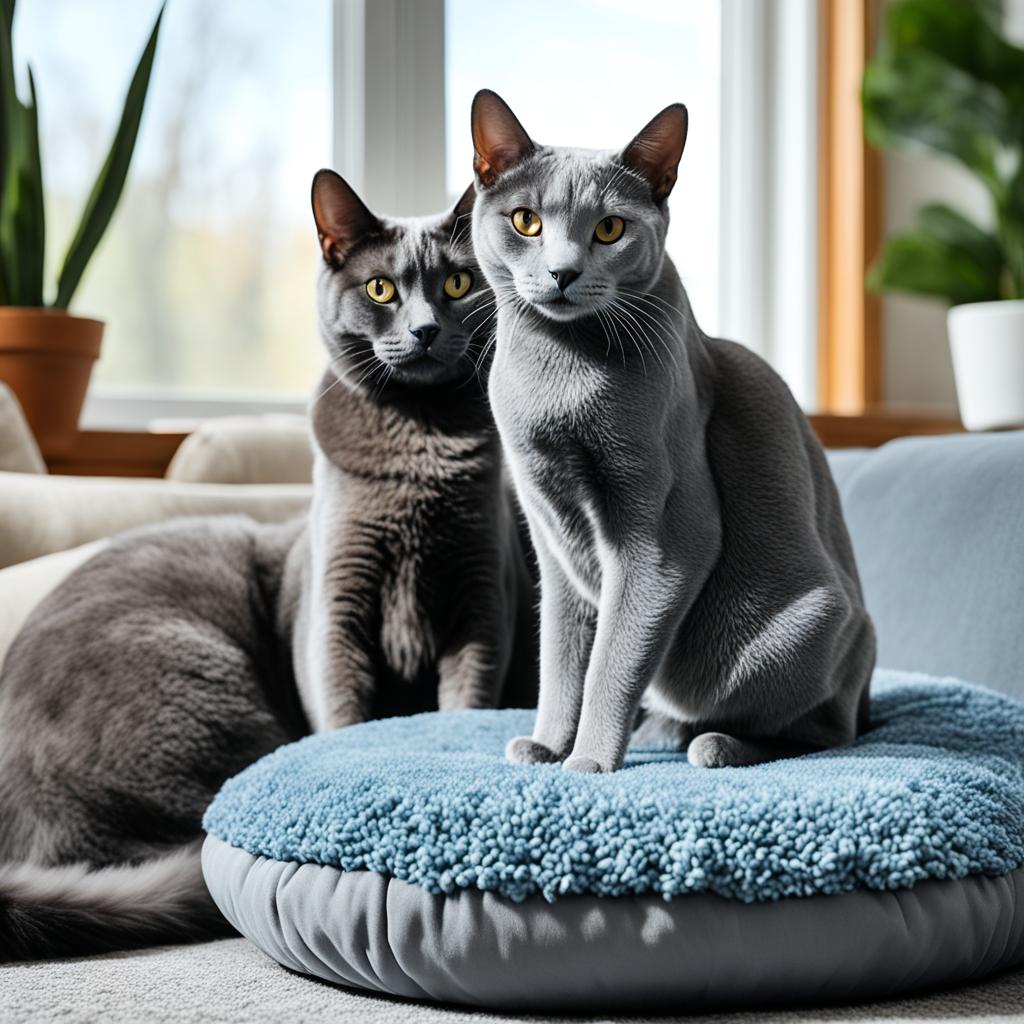
Having many pets at home can bring joy but it also comes with challenges. To live happily together, you need to understand your pets. Learn to manage their behaviors well.
Common Behavioral Issues
When a new pet joins your family, you might notice some common problems. These can be things like fighting, stress, or one pet claiming certain areas as theirs. It’s important to keep an eye on these and deal with them right away.
Setting up different places for eating can avoid fights over territory. Also, teaching all pets the same rules can stop disagreements.
How to Handle Aggression
Keeping the peace between your pets is crucial. Using toys and areas for each to play separately can lower stress. Also, slowly introducing them to each other in positive ways is key.
If pets keep being aggressive, seeking help from a behavior specialist is a good idea. They can offer advice tailored to your pets’ needs.
Practical Tips for Russian Blue Cat and Dog Cohabitation

To help your Russian Blue cat and dog live together peacefully, practical tips are key. Each pet should have their own safe area. It’s also important to encourage them to play and interact together.
Creating Separate Spaces
Make sure to give each pet a private, safe spot. It could be a special bed, a comfy crate, or even a quiet room. These areas are vital for reducing stress and giving them a space of their own when needed.
Doing activities and playing together can make your cat and dog closer. Use toys that both of them enjoy. For example, toys that mimic hunting for the cat and are fun for the dog too.
Always watch when they play, to make sure it’s going well and to stop any issues. Giving them treats and praise for getting along helps too. This makes living together a good experience for everyone.
Personal Anecdotes: Real-Life Experiences of Cohabitating Pets

Ready for some personal anecdotes of pet cohabitation between Russian Blue cats and dogs? You’re in for a treat! Let’s dive into these relatable, heart-warming lived experiences shared by multi-pet household enthusiasts.
“We brought home a Russian Blue kitten, and our Labrador retriever instantly took on the role of the big brother. From snuggling during nap times to sharing toys, they developed a bond that melted our hearts. Their lived experiences together have been nothing short of magical.”
In another family’s tale, their Russian Blue, who was once distant, began interacting more after a slow start. This involved happy chasing games with their terrier. They found out that learning how each pet communicates is crucial for a peaceful home.
| Pets | Initial Reaction | Outcome |
|---|---|---|
| Russian Blue & Labrador | Instant Bond | Snuggling & Sharing Toys |
| Russian Blue & Terrier | Gradual Acceptance | Playful Chases |
These anecdotes teach us important lessons. From quick friendships to slow starts that lead to fun activities, every story is special. What’s clear is that showing care, giving time, and understanding are key to making pets get along. In these inspiring stories, this caring approach really shows its magic.
Scientific Insights: Historical and Biological Perspectives

The history of pets is an amazing journey. It shows how cats and dogs changed from wild animals to our best friends. This process took thousands of years. It shows how well they can live with people. Knowing how they became our friends helps us understand the cat-dog relationship dynamics at home.
Domestication History of Cats and Dogs
Looking back, we see that cats and dogs started as working animals. Dogs helped with hunting and protected people. Cats controlled pests with their natural hunting skills. But as time went on, their roles changed. They became valued members of human families.
Behavioral Science of Cat-Dog Relationships
The science behind cat-dog relationship dynamics is quite interesting. Dogs often look for a leader, and cats like to be alone. This can affect how they get along. For example, when a dog is happy to see its feline friend, the cat might get scared. This is because cats use quiet ways to talk, not excitement like dogs do. Knowing this can help make a peaceful home for all pets.
The Role of the Owner in Facilitating Harmony
The success of living together for a Russian Blue cat and a dog depends a lot on the owner. How you teach and take care of your pets matters a great deal in how well they get along.
Training Techniques
Using positive training is key to a happy home for all pets. Giving rewards and using clear commands builds respect and understanding. For example, praising the cat for being calm near the dog or giving the dog treats for acting sweetly helps keep peace. Consistent use of these methods by the owner is vital for a good pet relationship.
Creating a Safe Environment
A safe home for pets means managing risks and making sure each pet has their own space. Have separate places for eating, sleeping, and playing to avoid fights and make them feel safe. The owner must always watch over them and step in if there’s trouble. With the right setup, your cat and dog can live together happily, helping both to do well.
Here’s a quick overview of the steps involved in nurturing this relationship:
| Action | Details |
|---|---|
| Initial Introductions | Start with controlled and supervised meetings while using positive reinforcement techniques. |
| Observing Behavior | Monitor body language and interactions closely to identify signs of discomfort or aggression. |
| Separate Resources | Provide separate areas for feeding, sleeping, and playing to prevent territorial disputes. |
| Consistent Training | Use reward-based methods to encourage positive behavior and establish mutual respect. |
| Ongoing Supervision | Regularly supervise interactions and intervene when necessary to ensure a safe environment. |
Focus on how you, as the owner, can train with positivity and make a safe space for your pets. This leads to a happy life for your Russian Blue cat and dog.
Conclusion
Having pets at home can make it lively and peaceful, especially with Russian Blue cats and dogs. By understanding their differences and introducing them properly, they can make perfect friends. To make a happy pet family, a lot of planning and care is needed.
The key to success with many pets is to think and act carefully. Consider their habits and train them well together. By doing this, a home where cats and dogs get along is very possible. The myth that they always fight is not true if you create a good environment for them.
With the right steps, living with multiple pets can be wonderful. The journey of making them a happy family is all about love and commitment. Enjoy the special joy each pet adds to your life.
FAQ
Can Russian Blue cats live with dogs?
Russian Blue cats can be good with dogs if they have the right personality. It’s important to introduce them slowly. This way, they can learn to live together peacefully.
What are the common characteristics and temperament of Russian Blue cats with dogs?
Russian Blue cats are known to be quiet and easygoing. This can work well with most dogs. Some cats may even enjoy playing and being active with their dog friends.
Are there specific dog breeds that are more compatible with Russian Blue cats?
Yes, some breeds may get along better with Russian Blue cats. Non-sporting dogs and toy breeds are a good match because they are usually calm and enjoy play.
How should I introduce my Russian Blue cat to a dog?
Start by getting the pets ready for the introduction. Make sure they both feel safe. Then, introduce them slowly and with care, watching over them. Use treats and praise to encourage good behavior.
What signs indicate a successful cohabitation between Russian Blue cats and dogs?
If the cat and dog are calm around each other, that’s a good sign. They may groom each other, sleep near one another, and play nicely. Signs of peace include no fear or aggression.
What are some practical tips for fostering a good relationship between Russian Blue cats and dogs?
It’s helpful to give each pet a safe spot. Also, encourage them to play together under your watch. Make sure they have enough of their own things, like food and water bowls, to avoid fighting.
Are Russian Blue cats hypoallergenic, and does it help with cohabitation with dogs?
Russian Blue cats are often better for people with allergies. Pairing them with a dog that matches their energy and temperament can make living together easier.
What challenges might arise in a multi-pet household with Russian Blue cats and dogs, and how can they be overcome?
Problems can include fighting and issues over territory. To solve these, offer enough for everyone and train your pets well. Keep their environment stress-free. Sometimes, a professional’s help might also be needed.
What role does the pet owner play in ensuring a peaceful cohabitation?
Owners are key to a peaceful home. Positive training and a safe space for pets are important. Monitor them, and make sure they have what they need. This shows them to respect and understand each other.
How does historical and behavioral science inform the cohabitation of Russian Blue cats and dogs?
Over history, cats and dogs have come to live together. Knowing how they communicate and their natural habits helps owners. It guides them to help their pets get along well.


