
Have you noticed your Ragdoll cat acting out when you’re away? Ragdolls are known for being overly attached. This is because they are designed to be the best pet friends. They really need human company all day long. If Ragdolls are left alone, they can get very upset. Signs of distress might include not eating, hiding, being mean, or too much cleaning. Seeing these actions means it’s time to find ways to make your Ragdoll less worried when you’re gone.
Key Takeaways
- Ragdoll cats are companion cats that thrive on human interaction.
- Prolonged absence can lead to visible distress signals such as hiding, not eating, or aggression.
- It’s essential to identify signs of separation anxiety early on to ensure the well-being of your pet.
- Implementing stress management strategies can help alleviate your Ragdoll’s separation anxiety.
- Knowing how to properly care for and attend to your cat’s needs can make a significant difference in their mental health.
Understanding Ragdoll Cat Behavior

Ragdoll cats are special when it comes to behavior. They’re not like other cats that are happy doing their own thing. Ragdolls really need your company and love routines. Understanding how they act helps you have a great bond with your cat.
Natural Companion Cats
Ragdolls are more than just beautiful. They are true companion cats. They love to stay close, following you everywhere. Their behavior shows how much they need human presence. They need a stable daily life. Changes in routine can make them act out.
Signs of Separation Anxiety
Ragdolls can feel sad when you leave them alone. They might walk around a lot, hide, or meow a ton. This shows they’re anxious without a clear routine. Try to keep things steady for them. This way, both you and your cat can stay calm and happy.
Common Symptoms of Separation Anxiety in Ragdoll Cats

Finding out if your Ragdoll cat has separation anxiety is important for their well-being. Knowing what signs to look for can help you help them early on. This gives your pet the support they require.
Avoiding You
Does your Ragdoll cat seem to stay away from you suddenly? Do they act like they’re not interested in hanging out like they used to? They may be dealing with separation anxiety. This change in behavior is their way of showing they’re sad or stressed when you’re not around.
Hiding Away
A cat with separation anxiety might find comfort in hiding a lot. They choose to be on their own in hard-to-reach spots. It’s their strategy to deal with being stressed. Knowing about this symptom is key to helping them overcome separation anxiety.
Overgrooming
Cats that lick themselves too much or pull their fur out are showing a big sign of anxiety. If your Ragdoll is overgrooming to the point of hurting themselves, they need help. You can try changing their diet or working on their behavior. This can make them feel less anxious.
How Long Can You Leave a Ragdoll Cat Alone?

It’s important to know how long a Ragdoll cat can be left alone. They are often active at night but still need care and company in the day.
Suitable Alone Time
Experts say Ragdoll cats should not be alone for more than eight hours. Each cat’s needs are different, so watch your cat’s reactions. This will tell you what they need.
Consequences of Extended Absence
If a Ragdoll is alone too long, they may become bored or hungry. This can lead to bad behaviors or avoiding old food. Train your cat early to handle being alone better. Also, make sure they always have fresh food, water, and things to do. This helps reduce stress.
By doing this, your cat will be happy. And, the whole family will enjoy a peaceful home.
Why Ragdoll Cats Are Prone to Separation Anxiety

It’s key to know why Ragdoll cats often get separation anxiety. To help them, it’s vital to understand what they need. These cats love deeply, and this makes them worry when they’re not with their humans.
Breed Characteristics
Ragdolls are very affectionate and need a lot of attention. They like to be with people all the time. This makes them feel anxious when alone. A stable and social environment is very important for them.
Environmental and Routine Sensitivity
They do best in stable environments and routines. Changes can make their anxiety worse. To help, keeping a regular routine and a calm environment is key. This helps your Ragdoll stay peaceful, even when you’re not around.
| Factors | Ragdoll Cats | Solution |
|---|---|---|
| Affectionate Nature | High | Increase Social Interaction |
| Routine Sensitivity | High | Maintain Consistent Environment |
Learning about these solutions can really make a difference. By doing the right things, we can take care of our Ragdolls. They’ll feel safe and loved, even when we’re away.
Tips for Ragdoll Cat Separation Anxiety

Dealing with separation anxiety in a Ragdoll cat can be tough, but there are good strategies. It’s vital to know your cat’s needs. Here are some tips for making your Ragdoll feel more comfortable when you’re not around.
Gradual Desensitization
*A proven strategy for Ragdoll separation anxiety is gradual desensitization. Begin by leaving your cat alone for short periods. Then, slowly increase the time. This approach helps your cat get used to being alone.
Environmental Enrichment
Ensure your Ragdoll has plenty of toys, scratching posts, and fun activities. Adding climbing structures and window perches can keep them busy. Such activities can help your cat focus on something other than your absence.
Using Scented Objects
Leaving items with your scent on their sleeping spots is a great way to reduce stress. Things like your worn t-shirts or blankets offer comfort. They remind your cat of your presence even when you’re not there.
| Strategy | Benefit |
|---|---|
| Gradual Desensitization | Helps them get used to being alone |
| Environmental Enrichment | Keeps them entertained and active |
| Using Scented Objects | Provides comfort and a sense of presence |
Remember, being consistent with these strategies is essential. By gradually getting your Ragdoll used to you not being there, making their environment fun, and leaving scented objects, you help them cope. This can lead to a happy and content cat.
How to Handle Ragdoll Cat Separation Anxiety?
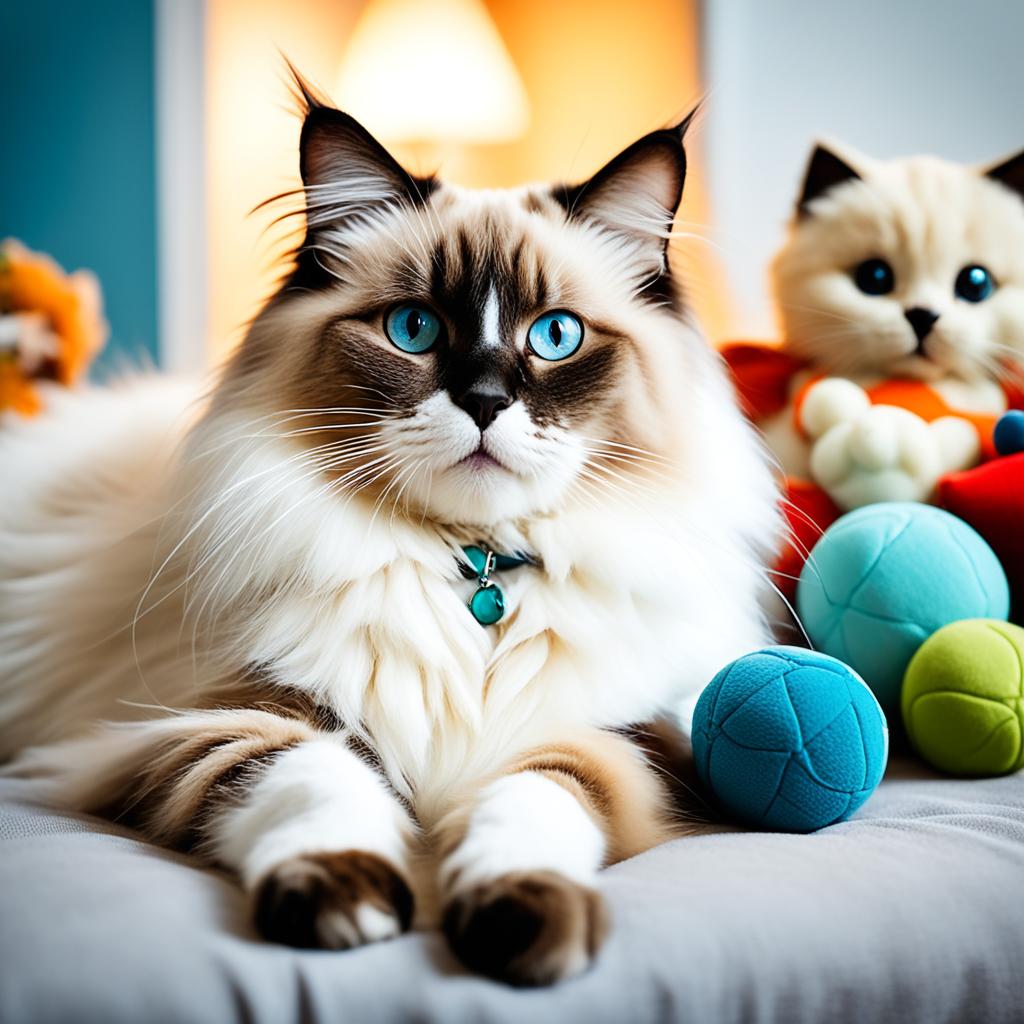
Ragdoll cats are known for being great friends. Yet, they may find it hard when alone for long. Dealing with their separation anxiety needs a planned method.
Behavioral Training
Using behavioral training is key to fix issues with Ragdolls. The training should aim to make them more independent. Your starting point could be leaving your cat alone in a room briefly. Then, slowly increase this time. And remember to use rewards when your cat handles it well.
Establishing a Routine
Having a set routine can greatly assist with separation anxiety in Ragdolls. Try to keep the same time for feeding, playing, and alone time. This helps your cat know what to look forward to, lowering stress. A regular routine also offers a sense of predictability.
Consulting a Veterinarian
If training and routine changes aren’t enough, a vet visit might be necessary. A vet can offer advice customized to your pet. They might suggest special products for anxiety or therapy to alter your cat’s behavior.
| Approach | Details |
|---|---|
| Behavioral Training | Gradually increase alone time with positive reinforcement. |
| Establishing a Routine | Maintain a consistent daily schedule to provide stability. |
| Consulting a Veterinarian | Seek professional advice for tailored Ragdoll cat separation anxiety help. |
Work on these things consistently for better behavior outcomes in Ragdolls. With the right care, you and your cat can enjoy a calm and happy home life.
Environmental Enrichment Ideas for Ragdolls
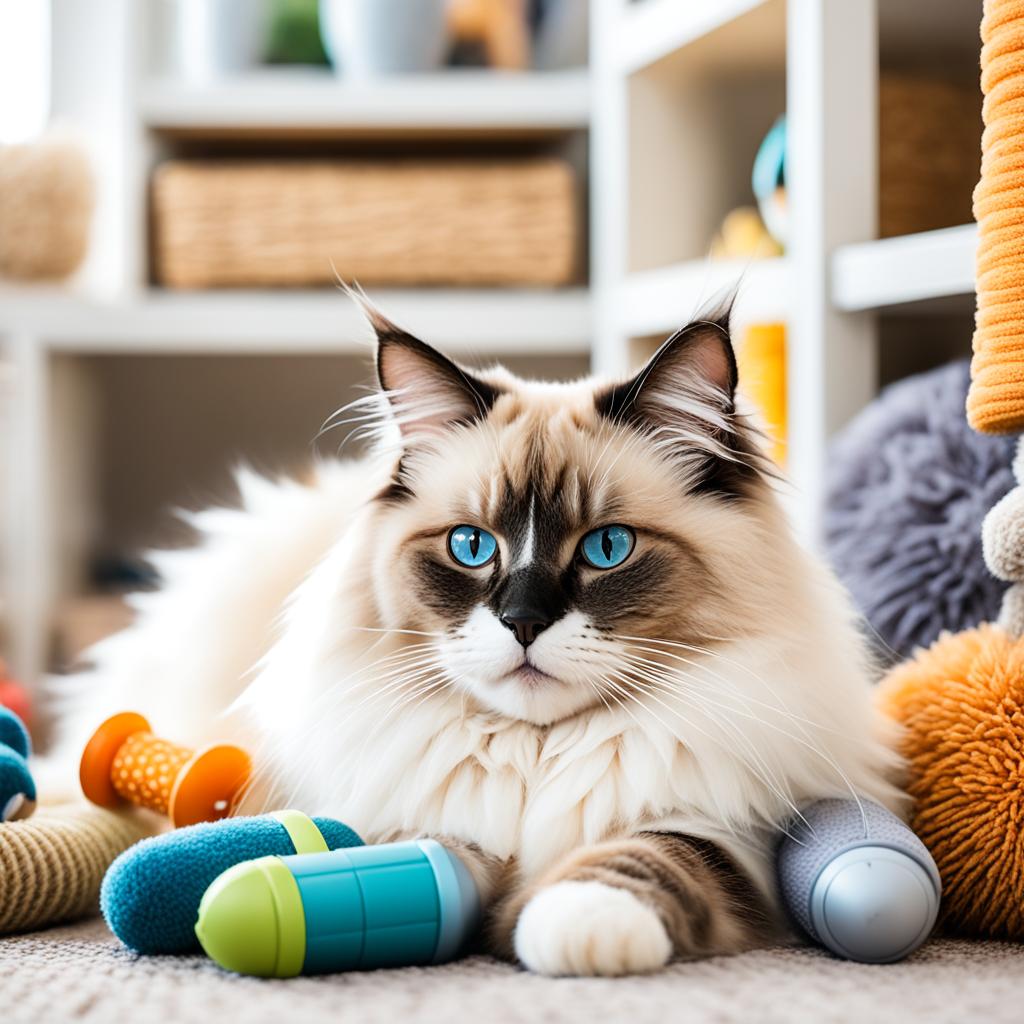
It’s important to create an exciting space for your Ragdoll cat. This helps reduce anxiety and increases their well-being. Through fun activities and new items, you can boost their mental and physical health. This lessens anxiety and helps them behave better.
Interactive Toys
Interactive toys are great for your Ragdoll. They make playtime fun and keep your cat sharp. Toys like feather wands, laser pointers, and puzzle feeders mimic hunting. They help with problem-solving and keep cats entertained. This playtime is key for Ragdoll cat behavior solutions. It keeps their minds busy and their anxiety low.
Scratching Posts and Perches
Scratching posts and perches are crucial for your Ragdoll’s health. They provide physical movement and a place to claim as theirs. Scratching helps with claw care and marking territory. Perches allow them to watch over their space, boosting their confidence. This setup is great for Ragdoll cat anxiety relief. It gives them ways to exercise and feel secure, leading to a happier life.
Providing Companionship for Your Ragdoll
Ragdolls love company, but they also struggle with being alone. A great way to help with their anxiety is by making sure they aren’t lonely. This can make a big difference in how stressed and sad they feel while you’re gone.
Other Pets
If you’re thinking about getting another pet, Ragdolls often do well with companion animals. This can be another cat, a friendly dog, or a smaller pet as long as they’re watched. Having another animal around gives your Ragdoll someone to play with. It helps a lot in reducing their stress when you’re not there. Just remember to introduce any new pets slowly.
Small adjustments to your home, like adding another pet, can make a significant difference for your Ragdoll’s peace of mind.
Pet Sitters and Visitors
Sometimes, our schedules get too busy to spend all day with them. In these cases, pet sitters or visits from friends can be a lifesaver. They ensure your Ragdoll is spending time with someone, keeping to their daily routine.
Regular visits from caretakers lessen your cat’s anxiety and make them feel secure. These simple steps can make a big difference in how well your Ragdoll copes when you’re not around.
FAQ
What are the signs that my Ragdoll cat is experiencing separation anxiety?
Your Ragdoll may show signs like hiding, avoiding people, or grooming too much. They might also eat less or act aggressive. These signs show they are anxious or stressed.
How long can I safely leave my Ragdoll cat alone?
Avoid leaving your Ragdoll cat alone for more than eight hours. They need company and a regular routine. Being alone for long can stress them out and lead to bad behavior.
Why are Ragdoll cats prone to separation anxiety?
Ragdolls love being around people and need a stable routine. Their strong attachment to humans makes them anxious when alone. They prefer a predictable life.
How can I help my Ragdoll cat cope with my absence?
Use strategies like making them used to you being away slowly. Also, give them fun toys and places to scratch. Including your scent on items helps them feel at home. These steps can make your cat feel better.
What are some common symptoms of separation anxiety in Ragdoll cats?
Your Ragdoll might hide, avoid contact, or groom a lot. You might see them hiding for long periods or having skin issues. Also, watch for changes in how much they eat.
Can environmental enrichment help with my Ragdoll’s separation anxiety?
Yes, toys, posts, and cat towers make your cat happier and healthier. They reduce stress behaviors and keep life fun for your Ragdoll.
How can I establish a routine to help manage my Ragdoll’s separation anxiety?
Be consistent in feeding and playing with your Ragdoll daily. A set schedule makes them feel safe. It also reduces stress from uncertainty.
Is behavioral training beneficial for Ragdoll cats with separation anxiety?
Training can make your cat more independent. Start by leaving them for short times and increase slowly. Give them fun things to do while you’re away.
Should I consult a veterinarian for my Ragdoll’s separation anxiety?
If your cat is very anxious, talking to a vet is a good idea. They might suggest things like a special diet or medications to help with stress.
Can having other pets help reduce my Ragdoll’s separation anxiety?
Another pet can make your Ragdoll feel less lonely. Make sure they match well. This helps give your cat the social interaction they need.
Would hiring a pet sitter or having visitors help with my Ragdoll’s anxiety while I’m away?
You bet. Having someone look in or play with your cat can keep their routine and lower stress. Pet sitters or visitors add vital interaction to your cat’s day.


