
Persian cats can live over 15 years with the right care. This makes regular vet check-ups very important. They help ensure a long and healthy life. These check-ups are about more than just shots. They help catch health problems early.
For baby Persian cats, once-a-year checks are enough. But for older cats, more visits are needed. It all helps the vet spot and treat issues quickly.
Vets check many parts of your cat’s health at these visits. They look at the cat from head to toe. Regular blood tests, shots, and keeping bugs away are very helpful. Some vets even have ways to help with the costs.
Key Takeaways
- Checking in with the vet is key for Persian cats to live long, healthy lives.
- These visits can find problems early and set health standards.
- Older cats need to see the vet more often.
- Regular shots, tests, and flea control are very important.
- Help with vet bills can make things easier for pet owners.
Understanding the Importance of Regular Vet Check-Ups

Keeping up with vet check-ups is crucial for your Persian cat’s health and life. These check-ups help the vet watch your cat’s health closely. They can find and fix small issues before they get big.
Why Routine Health Exams Matter for Persian Cats
Health check-ups are key to catching and dealing with problems early. This makes it easier and cheaper to keep your cat healthy. These visits also let the vet notice if your cat is acting different or eating less.
Benefits of Early Disease Detection
Finding diseases early makes treatment work better. Older cats need more check-ups to stay well. At these visits, vets look for signs of common problems, like kidney or dental issues. They do tests to make sure your cat is doing okay.
Preventative Care Measures
To prevent problems, vets check your cat’s routine, food, and weight regularly. They also look at how your home environment might affect your cat. Making these regular checks can help avoid health troubles in the future.
Components of a Comprehensive Wellness Exam
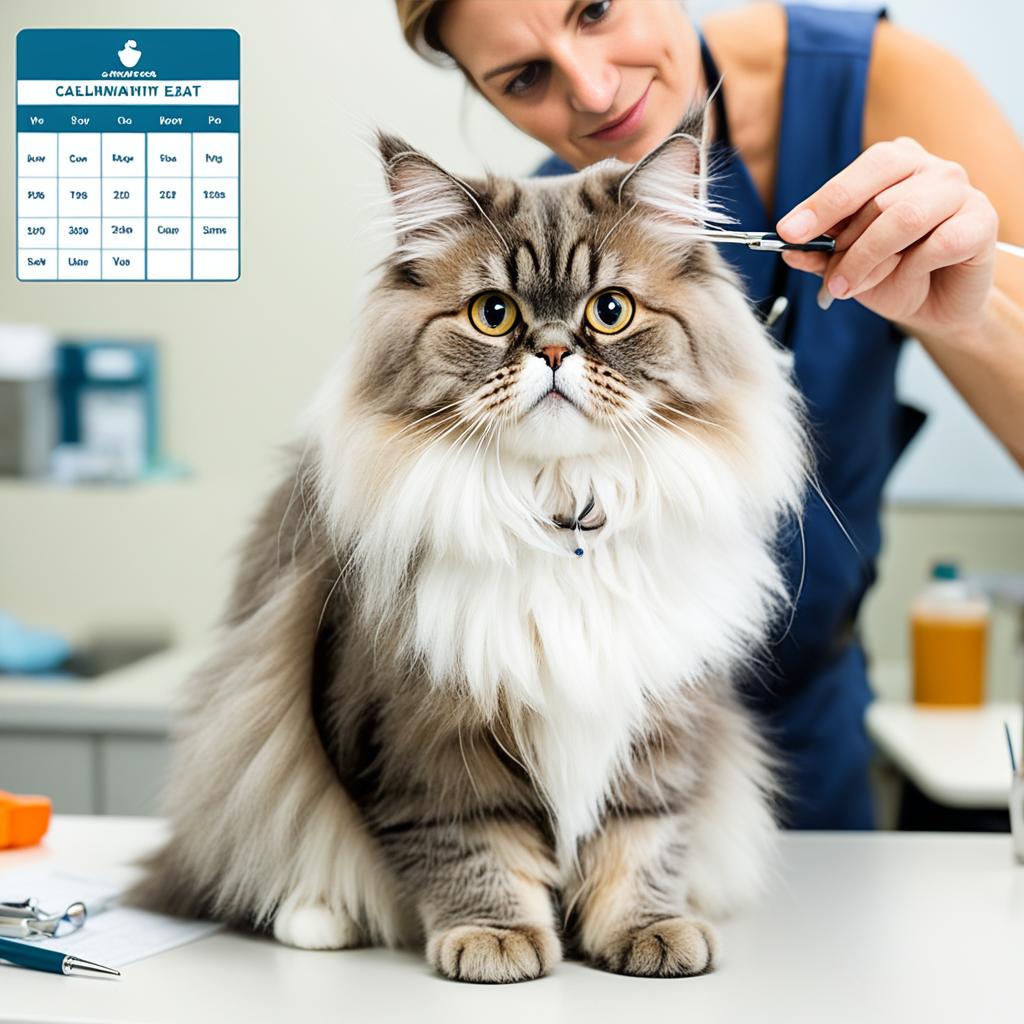
Giving your Persian cat regular wellness exams is very important. These check-ups catch any health problems early. They include a careful look over your cat and some important tests.
Physical Examination Details
At the check-up, the vet looks at everything from nose to tail. They check the cat’s weight, coat, and condition. The vet also looks at the eyes, ears, and mouth for potential problems.
They listen to the heart and lungs. Then, they feel the belly for anything unusual. It’s also important to watch how the cat walks and see if it’s in any pain.
Importance of Annual Labs
Having labs done each year is key. These tests set a health baseline and can catch diseases early. Tests like bloodwork and urinalysis can find issues such as kidney disease or diabetes quickly.
This early detection helps make treatments more effective. It also makes diseases easier to manage.
Vaccination and Parasite Prevention
Vaccines shield your Persian against serious diseases. For instance, they protect from rabies and a certain flu. It’s also vital to prevent parasites, even if your cat stays inside.
Your vet will give monthly treatments. These keep away heartworms, fleas, and other bugs.
Keeping up with annual vet visits is good for your cat’s well-being. They get vaccines, stay clear of parasites, and have their health checked. This keeps your cat happy and living longer.
| Component | Details | Significance |
|---|---|---|
| Physical Examination | Body condition, weight, coat, eyes, ears, mouth, heart, lungs, abdomen, gait, pain assessment | Identifies immediate health issues |
| Annual Labs | Bloodwork, urinalysis | Early disease detection |
| Vaccinations | Rabies, feline viral rhinotracheitis | Prevents serious infections |
| Parasite Prevention | Monthly medications | Protects against heartworms, fleas, etc. |
How Often Should You Schedule Vet Visits?

Vet visits are key to keeping Persian Cats healthy. The needed frequency of these visits depends on the cat’s age and health. Keep in mind their overall well-being.
Exam Frequency Based on Age
Young Persians, up to 7 years old, do well with yearly check-ups. These visits track their growth and health. Once they hit 8, Persian cats should see the vet twice a year. As they grow older, more frequent visits are important. For those 15 and older, check-ups every three months are vital.
Special Considerations for Senior and Geriatric Cats
Older Persian cats need special care. Their vet visits should watch for ongoing health issues and weigh their risk for illnesses. More visits might be needed if they start to show common aging signs. These include problems such as kidney disease or arthritis. The goal is to keep them well and happy.
Factors Influencing Exam Frequency
A cat’s medical history, daily life, and past conditions affect check-up needs. Cats with health problems will probably need more check-ins. Whether they stay indoors or go out is also big. This affects their exposure to certain risks. Knowing your cat’s unique situation helps ensure the best care.
Regular Vet Check-Ups for Persian Cats?

It’s crucial to take your Persian cat for regular vet check-ups. Their special looks and fur make them need special care. A vet knows how to keep them healthy and happy during check-ups.
The Unique Needs of Persian Cats
Persian cats are not the same as other cats. Their flat faces might cause breathing problems. Their long fur needs regular grooming to stay beautiful and healthy. Vets will pay extra attention to these issues during a Persian cat health check.
Addressing Common Health Issues
There are a few health problems Persian cats often face. These include dental issues, breathing problems, and skin troubles. Watching their health closely can help catch these problems early. This makes their regular health checks very important.
Specific Dental Care for Persian Cats
Dental care means a lot for a Persian cat’s overall health. Because of their unique face shape, they can have more tooth problems. To take good care of their teeth, they need regular cleanings. Vets check their teeth often to prevent bigger dental issues. This care helps keep your cat’s quality of life high.
| Health Concern | Frequency | Preventative Actions |
|---|---|---|
| Respiratory Issues | Quarterly | Monitor breathing, regular vet check-ups |
| Skin Conditions | Monthly | Regular grooming, skin checks |
| Dental Problems | Semi-Annually | Regular dental cleanings, routine exams |
Setting the Right Schedule for Your Persian Cat’s Health Milestones
It’s crucial to know your Persian cat’s health milestones. This knowledge is key from when they’re kittens to when they’re old. Visiting the Persian cat veterinarian regularly ensures they stay healthy.
Persian Cat’s Health Life Stages
Each life stage of a Persian cat comes with different health needs. Kittens need many check-ups and first shots. Adults require regular visits to watch their health.
Mid-life means focusing on preventing common illnesses with vet visits. For seniors, check-ups become more frequent due to age-related health issues.
Planning for Routine Care and Unexpected Health Issues
Having a care plan means both regular and emergency vet visits. It’s important for Persian cat pet care. This helps catch and treat problems early and prepares you for emergencies.
| Life Stage | Recommended Visit Frequency | Key Health Focus |
|---|---|---|
| Kitten | Every 3-4 weeks | Vaccinations, growth monitoring |
| Adult | Annually | Development tracking, preventative care |
| Senior | Semi-annually | Age-related conditions, frequent monitoring |
| Geriatric | Quarterly | Comprehensive health exams, chronic disease management |
Creating a detailed health schedule helps your cat live its best life. This includes regular vet check-ups and emergency care plans. It’s all part of the most complete Pet care for Persian cats.
The Financial Aspect of Maintaining Your Persian Cat’s Health

Keeping your Persian cat healthy means more than just loving and caring for it. You also need to understand the financial side. Vet care can be expensive. Thus, it’s important to prepare for the costs involved.
Understanding Veterinary Costs for Wellness Care
It’s key to have regular wellness exams for your Persian cat. These help catch health issues early and keep your cat in good shape. The cost of these exams changes by location, the details of the check-up, and your cat’s specific health needs. They usually involve a physical exam, shots, and tests. Knowing these expenses upfront lets you budget better.
Managing Expenses with Payment Plans and Pet Insurance
Thinking about your cat’s health financially is crucial. Some vet clinics have payment plans to spread out costs. Also, having pet insurance can help a lot. It can cover a big part of the vet bills. These options make it easier to give your Persian cat the care it needs without breaking the bank.
| Cost Element | Estimated Expense |
|---|---|
| Wellness Exam | $50 – $100 |
| Vaccinations | $20 – $80 per vaccine |
| Lab Tests | $50 – $200 |
| Pet Insurance | $25 – $70 per month |
Planning early and knowing the costs for wellness care is vital. It helps your cat stay healthy while you manage your money well.
Conclusion
Regular Vet Check-Ups are key for Persian Cats. They help keep the cat healthy and happy. Preventative care is crucial for this breed.
Watching behavior changes can catch health issues early. This means less trouble later. Planning for vet costs is vital. You can use pet insurance or payment plans for help.
Regular check-ups and care knowledge lead to a great life with your Persian. Taking care of your cat’s health ensures many happy years together. It’s a big part of being a good cat owner.
FAQ
Why are regular vet check-ups crucial for Persian cats?
Regular vet check-ups are vital for Persian cats’ health and long life. These visits look for more than just needing shots. They catch diseases early on, which is key to stopping big health problems later.
What does a comprehensive wellness exam for a Persian cat include?
A thorough wellness check includes checking every part of your cat’s health. The vet examines the cat from head to toe, looking at its weight, eyes, and more. They also do check-ups on the heart and lungs. Plus, they cover essential tests, shots, and ways to prevent parasites.
How often should I schedule vet visits for my Persian cat?
The timing of vet visits depends on your Persian cat’s age. Younger cats need a check-up once a year. Older cats, from 8 to 14, should go every six months. For cats 15 and over, four visits a year are better to keep them healthy.
Why is early disease detection important for Persian cats?
Spotting diseases early makes them easier and cheaper to treat. These checks often catch problems before they get bad. This helps your Persian cat lead a healthier, happier life.
What preventative care measures are essential for Persian cats?
Preventative care means regularly looking at your cat’s habits, diet, and environment. These checks help catch big health issues early. They might suggest special health tests to look for common problems.
What are the unique needs of Persian cats during vet check-ups?
Persian cats need special care because of their unique looks and needs. The vet should especially watch out for breathing and tooth problems. Grooming, diet, and dental health are very important to keep your Persian cat in great shape.
How should I plan for both routine and unexpected veterinary expenses for my Persian cat?
Knowing about vet costs and paying methods is important for your cat’s health. Some clinics allow for payment plans and different ways to pay. Having pet insurance can also be smart. It helps deal with the costs of long-term care without worries.
Why is dental care important for Persian cats?
Taking care of your cat’s teeth is crucial. By age four, many Persians might face dental issues. Regular dental checks during wellness exams find and treat problems early. This keeps your cat comfortable and enjoying life.


