
Ever noticed Bengal cats seem more particular about what they eat? They have special needs when it comes to food. Being obligate carnivores, their bodies work best with meat-based diets. Unlike many cat breeds, they struggle with plant-based foods. Does this surprise you?
Due to a lack of certain digestive enzymes, Bengal cats find it hard to eat plants. A diet with a lot of plants can harm them, leading to issues like kidney disease. To keep them healthy, the best food for Bengal cats focuses on quality animal ingredients. This means food rich in meat, organs, and bones, with few carbs and fillers.
It’s wise to pick a premium cat food for Bengals that’s moist and not heavily processed. Bengals do well on diets low in carbs. They benefit most from animal proteins and staying well-hydrated. This approach ensures they stay active and happy.
Key Takeaways
- Bengal cats are obligate carnivores needing high-quality animal ingredients.
- They have a tough time eating plants because they lack certain digestive enzymes.
- Ideal food involves meat, organs, and bones, with a focus on moisture.
- Reducing carbs and fillers is vital for their well-being.
- Staying properly hydrated through food helps avoid kidney issues.
Understanding Bengal Cat Nutrition
Exploring Bengal cat nutrition is like going on a fun journey. Once you learn the main points, keeping your cat healthy will be easy. Focus on feeding them the right foods. It should be full of the right nutrients, proteins, and water. This guide will help you understand what Bengal cats need in their diet.
Macronutrient Requirements
Bengal cats need special kinds of foods. Their perfect diet is high in protein and low in carbs. Most of their nourishment should come from meat. Foods with plant-based ingredients usually won’t cut it. For the best Bengal cat food, choose items with lots of meat, organs, and little carbs.
Importance of Protein
Protein is vital for Bengal cats. It helps their muscles grow and keeps them healthy. Bengal cats are like wild cats and they need a lot of protein. Look for cat foods with high-quality protein to keep your Bengal energetic and playful.
Water and Hydration
Bengal cats need to stay hydrated. They can get slightly dehydrated, especially if they eat mostly dry food. Wet food helps them get the water they need, which is just as important as their meals. It also helps prevent kidney problems, which are common in Bengals. The key to feeding Bengal cats well is to make sure they get both the right nutrients and enough water.
- Ensure high protein, low carb diet.
- Prioritize animal-based ingredients.
- Include wet food for better hydration.
Learning about Bengal cat nutrition is part of loving and caring for them. Aim for a diet that’s balanced with the right nutrients, proteins, and water. This way, you’ll be giving your Bengal the best.
Benefits of High-Protein Diets for Bengals
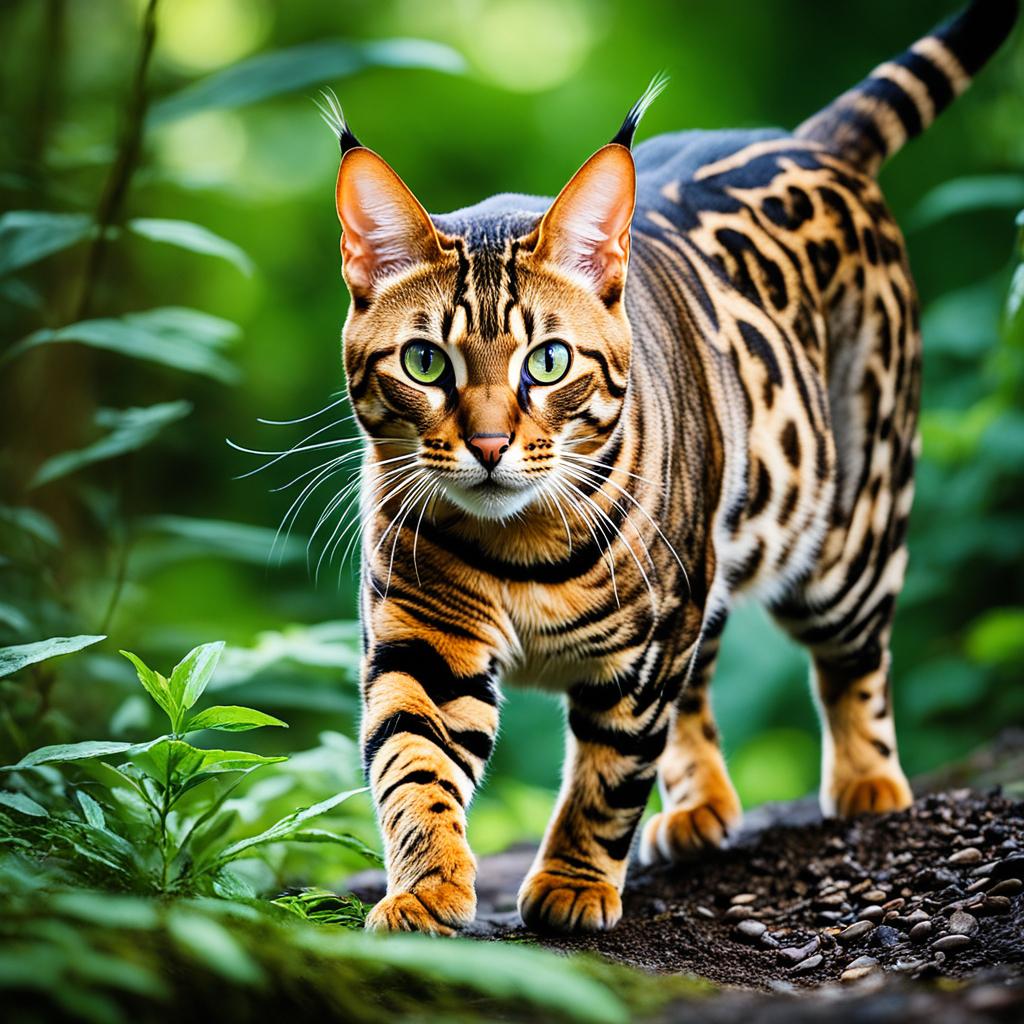
Want your Bengal cat to feel like true jungle royalty? A high-protein diet is key. Bengals are like their wild ancestors, needing lots of animal proteins for their active life. A high-protein diet is crucial for their health and happiness.
High-protein diets benefit Bengals in many ways. They mimic their natural, wild diet. These proteins help maintain their high energy, making your home a real adventure. Think of it as fuel for their Tarzan-like adventures!
This diet also helps build lean muscle. It’s perfect for keeping them in tip-top shape, given how active they are. It aids in weight control too, keeping them nimble and ready to leap whenever they want.
- Energy Boost: High-protein intake supports their high activity levels.
- Muscle Development: Builds lean and strong muscles.
- Weight Control: Helps maintain an optimal and healthy weight.
To keep your Bengal healthy, their diet should echo their wild behavior. A high-protein diet isn’t just about nutrition. It also encourages their playfulness and boosts their health and life span.
Role of Animal-Based Ingredients

Feeding your Bengal cat focuses on animal-based ingredients for Bengal cats. These ingredients give them vital proteins and nutrients. A diet with these ingredients keeps your cat healthy and energized.
Importance of Raw Meat
A raw diet for Bengal cats is great for them. It offers easy-to-digest nutrients in a natural way. Raw meat is like what Bengal cats eat in the wild, and it’s full of good stuff for them.
Organ Meats and Bones
Adding organ meats and bones helps your Bengal cat even more. Organ meats like liver and heart have vitamins A, D, E, K, and minerals iron and zinc. Bones give them calcium, keeping their teeth and gums healthy.
To really see why these foods are good, let’s check their benefits:
| Ingredient | Nutritional Benefit |
|---|---|
| Raw Meat | High in protein and essential amino acids |
| Organ Meats | Rich in vitamins (A, D, E, K) and iron |
| Bones | Excellent source of calcium and dental hygiene |
So, animal-based foods are essential for Bengal cats. They keep the cats active, boost their immune system, and support their health.
What Are the Best Cat Foods for Bengal Cats?

Looking for the perfect food for your Bengal cat is like finding hidden treasure. The top cat foods for Bengals match their need for a meaty diet. They do best with meals high in protein and not many carbs.
“Cats, especially Bengal cats, need diets that remind them of hunting,” experts say.
Many people suggest wet food over dry because it keeps Bengals hydrated. This helps fight off common health issues. Always pick foods with real meat as the main ingredient and stay away from filler like grains.
Raw food, though more work, is a great choice too. It allows you to perfectly balance your Bengal’s meals. This ensures they get all the vital nutrients they need.
- High Moisture Content: Helps in keeping your Bengal hydrated.
- Real Meat: Ensure it’s the first ingredient.
- Avoid Fillers: Skip grains and unnecessary additives.
No matter if you choose wet food or make your meals, remember their wild side. This way, you can be sure you’re giving them the perfect food.
Grain-Free and Gluten-Free Options

Thinking about giving your Bengal cat a grain-free and gluten-free diet is a good idea. These diets match what their ancestors ate. They could be just what your Bengal cat needs.
Optimal Choices Without Grains
Grain-free diets for Bengal cats are all about top-notch animal protein. They skip the grains to lower the risk of tummy issues. This diet helps your Bengal stay healthy by offering more meat, which they need.
Health Impacts of Gluten-Free Diets
Gluten-free diets can help cats with allergies or sensitivities. They lower the odds of problems like itchy skin or upset stomachs. But, be careful to avoid high-glycemic fillers. This ensures your Bengal gets a balanced diet for good health.
Commercial Cat Foods: What to Look For

When you pick cat food for your Bengal, look for options that boost their health and energy. It’s important to know what ingredients are good for them and what to avoid.
Ingredients to Avoid
Stay away from unhealthy ingredients in your Bengal cat’s food. Ingredients too high in carbs and plant-fillers are not good. They can cause weight gain and stomach problems. Bengals need proteins from animals. Ingredients like corn, wheat, and soy don’t help them. Also, try to avoid foods with artificial colors or preservatives.
Recommended Brands
Several cat food brands are great for Bengal cats. They are known for using high-quality ingredients. They process the food less. And their formulas are made for Bengals’ special dietary needs.
| Brand | Features | Best Known For |
|---|---|---|
| Blue Buffalo | Real meat, no by-product meals, no corn, wheat, or soy | High protein content, grain-free options |
| Wellness CORE | Quality animal proteins, no artificial preservatives | Natural ingredients, nutrient-dense |
| Stella & Chewy’s | Freeze-dried raw, minimally processed | Convenient raw diet alternative |
Look into brands like Blue Buffalo, Wellness CORE, and Stella & Chewy’s for your Bengal. These brands offer great nutrition. They focus on quality proteins from animals. And, they limit artificial additives, which is good for your Bengal.
Homemade Diets: Balancing for Bengal Cats

Making your Bengal cat’s food is like cooking as a chef. You aim to give your cat all it needs in each meal. We’ll look at what’s needed and some recipes for Bengals.
Key Components
For balanced Bengal diets, you need these basics:
- Muscle Meat: Make this the main part of the diet. Choose from chicken, turkey, beef, or rabbit.
- Organ Meat: This includes liver and kidneys. They should be around 10% of the food.
- Bones: They offer calcium and benefit teeth. You can use ground bones or bone meal.
- Supplements: Don’t forget taurine, omega-3s, and a multi. They cover the diet’s full needs.
Sample Recipes
Below are a couple of recipe ideas for your Bengal:
- Chicken Delight: Mix 2 pounds of cooked chicken with chicken liver, 1000 mg taurine, and 50 grams of ground bone.
- Beef Feast: Combine 2 pounds of beef with beef liver, a bit of salt, 1000 mg taurine, and 50 grams of bone meal.
Always check with a vet or nutritionist to be sure your food is right. Homemade food ensures your Bengal thrives on a diet made just for them.
| Ingredients | Benefits |
|---|---|
| Chicken | High-quality protein |
| Liver | Rich in vitamins |
| Ground Bone | Source of calcium |
| Taurine | Essential amino acid |
Feeding Schedules and Portions

Setting up Bengal cat feeding schedules keeps them healthy and happy. Adult Bengals do well with two meals daily. On the other hand, kittens need to eat more often as they grow quickly. Keeping a regular feeding schedule makes things run smoothly.
Figuring out how much to feed is important but tricky. The size, age, and how active a cat is all play a part. It’s bad to give too much food as it can make a cat overweight. But, not giving enough can cause health problems too.
With a simple chart, determining the right amount of food is easy. Just look at your Bengal’s specific needs to find the perfect portions.
| Age Group | Meals per Day | Portion Size per Meal (ounces) | Notes |
|---|---|---|---|
| Kittens (up to 6 months) | 3-4 | 1-2 | Needs frequent meals due to growth spurts and high energy demands. |
| Adult Bengals | 2 | 3-6 | Dependent on activity level; active cats may require slightly more. |
| Seniors (10+ years) | 2-3 | 2-4 | May need smaller, more frequent meals due to slower metabolism. |
Using toys like puzzle feeders can help manage how much your cat eats. They also keep your cat’s mind sharp. Talking to a vet is key for making a feeding plan that’s right for your Bengal. A vet can help make sure your cat gets all the food they need without getting too much or too little.
Addressing Food Sensitivities and Allergies
Food sensitivities can make your Bengal cat feel bad. If your Bengal seems itchy, has tummy troubles, or gets many ear infections, check for allergies. Finding signs early is key to help your cat stay healthy.
Identifying Symptoms
Start by watching your cat closely. Look for itchy skin, vomiting, diarrhea, or red ears. These signs may show your Bengal is bothered by their food. Ask your vet for help. They may suggest a special diet to find the cause.
Diet Adjustments
After finding the problem, change your cat’s food. Try hypoallergenic or limited diets. These can really help your Bengal feel better.
Special diets have fewer ingredients that could cause issues. They may include only one type of protein. Or they might have proteins that are very easy to digest. Always work with your vet on any diet changes. This keeps your Bengal cat safe and well.
FAQ
What are the optimal macronutrient requirements for Bengal cat foods?
The best Bengal cat food is rich in animal proteins but low in carbs. It should have less than 5% carbohydrates. This diet is perfect for their carnivore needs.
Why is protein so important in a Bengal cat diet?
Protein helps Bengal cats build muscles and stay healthy. Since they come from wild cats, they need a lot of protein. This type of diet keeps them in good shape.
How can I ensure my Bengal cat stays well-hydrated?
Feed your Bengal cat wet foods to increase their water intake. This helps prevent kidney issues and is similar to their wildcat diet.
What are the benefits of high-protein diets for Bengal cats?
High-protein diets keep Bengal cats energetic and their muscles strong. These diets also help manage weight. In the wild, they would eat a similar diet for staying healthy.
Why are animal-based ingredients essential in a Bengal cat’s diet?
Animal proteins are key for Bengal cats. Raw meat provides a diet close to the wild. It also includes vitamins and minerals from organ meats.
What are the best cat foods for Bengal cats?
Food rich in animal proteins and low in carbs is best for Bengal cats. This includes high-quality wet foods. Such diets help with nutrition and hydration.
Are grain-free and gluten-free diets suitable for Bengal cats?
Yes, these diets are good for Bengal cats since they don’t need grains or gluten. They help keep their food true to their natural needs. And, they prevent tummy troubles.
What ingredients should I avoid in commercial cat foods for Bengal cats?
Steer clear of foods high in carbs and fillers. These don’t give any nutrition. Always choose foods with real meat and without lots of extra stuff.
Can you recommend some good commercial cat food brands for Bengals?
Great brands for Bengal cats focus on quality and animal ingredients. Look for options like Ziwi Peak, Stella & Chewy’s, and Tiki Cat. They are top choices.
What are key components of a homemade diet for Bengal cats?
For a homemade meal, include muscle meat, organs, bones, and additives like taurine. To ensure the diet is good, talk to a vet or nutritionist.
How should I determine feeding schedules and portion sizes for my Bengal cat?
Adults cats need two meals daily, but kittens might eat more often. How much they eat depends on their size and how active they are. A vet can help figure out the best portions.
How do I identify food sensitivities and allergies in my Bengal cat?
Watch out for signs like itchy skin, digestive issues, and ear problems. If you think your cat has allergies, a vet can help with an elimination diet. This can pinpoint the issue and guide the right food choices.


