
Ever wondered why your beloved Egyptian Mau turns your sofa into a scratching post? Before you resign yourself to a life of shredded upholstery, let’s dive into the reasons behind this behavior and explore effective strategies to protect your furniture from cats.
. Scratching behavior, an instinctual part of their nature, can lead to significant damage if left unchecked. But don’t despair just yet! Understanding and managing this natural instinct is key to harmonious living with your spotted fury friend.
Consider the story of Buddy, an underweight hound dog who illustrates the commitment required in caring for pets. Pets, both cats and dogs, reciprocate our love, making it vital to foster responsible pet ownership. By grasping the true motivation behind your Egyptian Mau’s scratching spree, you can better protect furniture from cats and maintain a happy home.
Key Takeaways
- Understanding why Egyptian Mau’s furniture scratching occurs can save your upholstery.
- Cats scratch to fulfill natural instincts and maintain healthy claws.
- Managing this behavior requires insight into the cat’s perspective.
- Responsible pet ownership involves addressing and redirecting cat scratching behavior.
- Bonding with your pet strengthens emotional ties, making training more effective.
Understanding Why Cats Scratch Furniture

Every cat owner knows the frustration of discovering their feline friend’s latest masterpiece on a freshly scratched piece of furniture. But before you despair, it’s important to understand the reasons behind this behavior.
The Nature of Cat Scratching
Scratching serves several purposes for cats. It helps them maintain their claws, which are essential for their survival in the wild. Additionally, scratching provides an excellent way for cats to stretch their muscles and relieve stress. By investing a little time in managing cat scratching, you can redirect their energy in a positive way.
Instinctual Behavior
Scratching is ingrained in cats thanks to their feline natural instincts. It’s not just about keeping their claws sharp; it’s also an emotional release. If you have an Egyptian Mau, you’re likely aware of their high energy and need for intense physical activities. This breed’s personality traits are a blend of affection and wild athleticism, further driving their instinct to scratch.
Marking Territory
One of the most intriguing aspects of cat scratching is its role in territorial marking. When a cat scratches, it not only leaves visible marks but also deposits scent from glands located in their paws. This dual-purpose marking helps communicate their presence to other cats and solidifies their claim over their territory. Understanding this helps in managing cat scratching behavior effectively.
By recognizing these natural behaviors, you can better address your cat’s needs and protect your furniture from becoming their favorite scratching post.
Why Does My Egyptian Mau Cat Scratch Furniture?
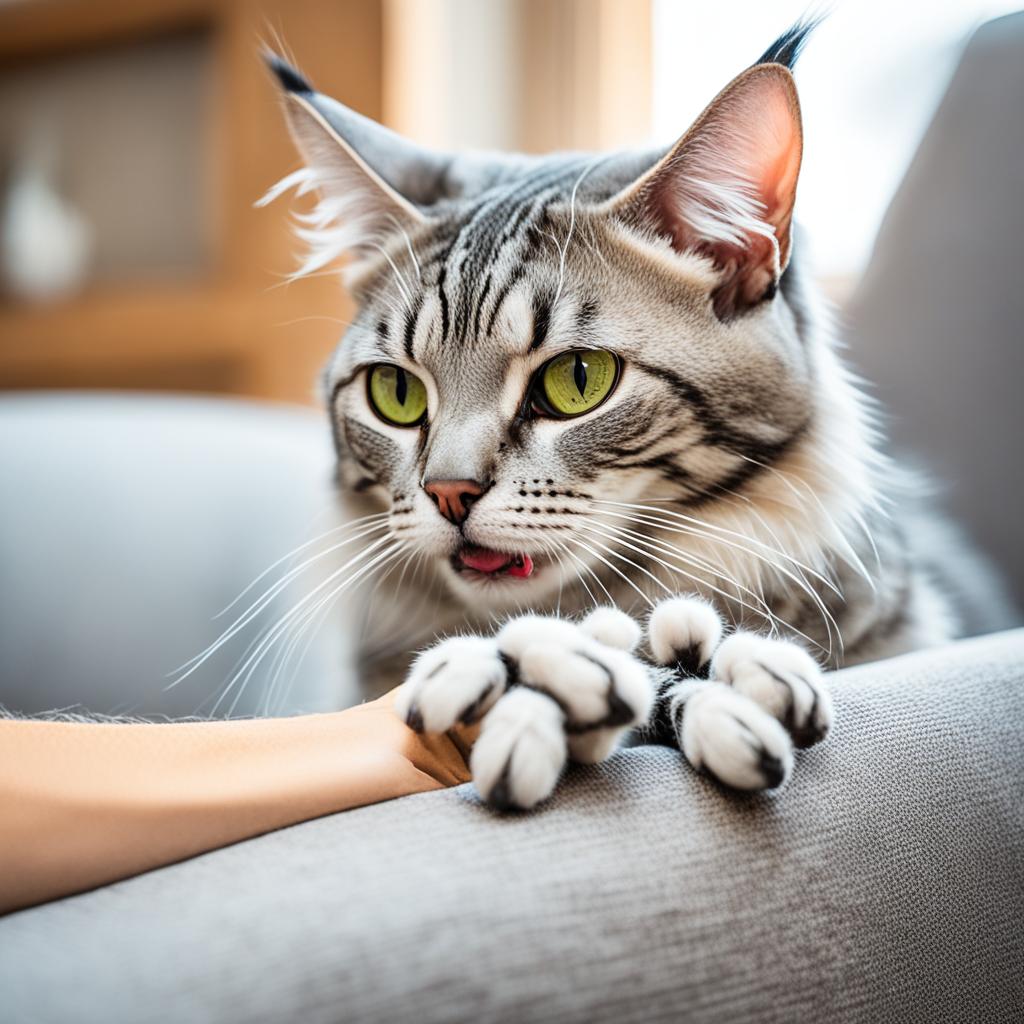
As you watch your Egyptian Mau vigorously clawing your cherished sofa, you might find yourself pondering the underlying cat scratching explanations. One significant reason is their instinct to sharpen and maintain their claws. By scratching surfaces, your feline friend naturally abrades the outer layer of their claws, keeping them in optimal condition. This process is essential for maintaining cat claws in a healthy state.
Beyond claw upkeep, scratching serves as a source of physical exercise, helping your cat stretch and flex their muscles. This activity is especially relevant for the highly active Egyptian Mau, who thrives on staying physically fit. Recognizing the importance of such activities can deepen your cat behavior understanding.
It’s also worth noting that your Egyptian Mau might be leaving behind more than just scratch marks. Their paws contain scent glands, and scratching allows them to mark their territory both visually and olfactorily. This aspect of Egyptian Mau scratching habits plays a crucial role in their communication with other cats, conveying dominance and ownership of their space.
To better comprehend your cat’s perspective, consider these key reasons summarized in the table below:
| Reason for Scratching | Explanation |
|---|---|
| Claw Maintenance | Scratching helps in maintaining cat claws by removing the outer layer. |
| Exercise | Provides physical activity and muscle stretching. |
| Territorial Marking | Leaves scent and scratch marks to communicate with other cats. |
By understanding these motivations, you can better empathize with your Egyptian Mau’s natural behaviors, creating a more harmonious environment for both you and your feline companion. Embracing these cat scratching explanations fosters a deeper bond and mutual respect between you and your cat.
Egyptian Mau Cat Behavior Explained

Famous for their striking looks and agility, the Egyptian Mau cats are no ordinary felines. Let’s dive into the nuances of their behavior to better understand these captivating creatures.
Unique Traits of Egyptian Mau Cats
Known for their swift movements and keen hunting instincts, Egyptian Mau cats are remarkably active. These felines frequently seek high perches, embodying their natural instinct to surveil their territory. This breed exhibits distinctive personality characteristics that make them both charming and challenging pets.
Activity Levels and Scratching
When it comes to feline activities, the Egyptian Mau doesn’t hold back. Their innate need for physical stimulation for cats explains why you might find them darting about or engaging in playful pounces. Scratching is a direct manifestation of their high energy levels, often seen as a way for them to release pent-up energy and mark their territory.
Emotional and Physical Needs
A happy Mau is one whose emotional health is well catered to. Understanding their emotional health in cats is crucial as these felines form tight bonds with their humans. Alongside ample physical activities, ensuring your Egyptian Mau’s emotional well-being will result in a less destructive and more contented pet.
| Behavior Trait | Description |
|---|---|
| Affinity for High Perches | Loves high vantage points, reflects natural instincts. |
| High Energy Levels | Requires regular physical stimulation for cats to stay happy. |
| Scratching | Both a play activity and a method to mark territory. |
| Strong Bonds with Owners | Essential for maintaining emotional health in cats. |
Preventing Furniture Scratching

When it comes to protecting your furniture from feline-induced destruction, offering your cat appealing alternatives to furniture scratching and establishing proper boundaries are paramount.
Providing Alternatives
The key to preventing your cat’s furniture scratching is to provide them with enticing alternatives. Scratching posts, cat trees, and even textured scratching pads can work wonders in directing your pet’s natural behavior away from your cherished sofa. When choosing alternatives to furniture scratching, opt for surfaces that mimic the texture and feedback your cat enjoys, whether it be sisal rope, corrugated cardboard, or carpeted options.
Additionally, incorporating cat scratching deterrents such as double-sided tape or citrus-scented sprays on your furniture can discourage your cat from continuing their destructive behavior. Combine these with furniture protection covers to further safeguard your possessions.
Setting Boundaries
To protect your home and its furnishings effectively, establishing clear cat scratching areas is essential. Use positive reinforcement techniques, such as rewarding your cat with treats or affection when they use their designated scratching areas. You could also use catnip to attract them to the approved scratching posts or areas.
Alongside setting these boundaries, it’s crucial to make certain items less appealing for scratching. Use cat scratching deterrents around your furniture and ensure your cat has plenty of engaging toys and activities. This combination will provide your feline friend with sufficient stimulation, reducing the inclination to scratch inappropriate surfaces.
| Furniture Protection Method | Benefits | Examples |
|---|---|---|
| Scratching Posts | Redirects scratching | Sisal, Carpeted, Corrugated Cardboard |
| Cat Scratching Deterrents | Discourages scratching | Double-sided tape, Citrus spray |
| Furniture Protection Covers | Physical barrier | Plastic slipcovers, Scratch-resistant fabric |
| Positive Reinforcement | Encourages desired behavior | Treats, Praise, Catnip |
Redirecting Cat Behavior

Redirecting scratching habits in your Egyptian Mau involves a delicate balance of understanding, patience, and strategic environmental modifications. Behavior modification in cats isn’t an overnight miracle but with consistent behavioral training for cats, it’s absolutely achievable.
To start, create enticing scratching zones. These spaces should have a variety of scratching posts and pads to satisfy their natural tendencies. Ensure the materials used are appealing to your cat’s claws—think sisal or heavy-duty carpet. Patience and consistency are your best allies here.
Using deterrents effectively can also make a big difference. Items like double-sided tape, sprays, and even aluminum foil can discourage unwanted scratching behaviors. But remember, the goal is always to redirect, not just deter.
- Create inviting scratching areas: Place scratching posts near your cat’s favorite spots to scratch.
- Use deterrents wisely: Employ products that are safe for both your cat and your furniture.
- Consistent training: Repetition is key. Encourage the use of proper scratching zones and reward positive behavior.
Lastly, consistent behavioral training for cats, especially Egyptian Mau training, involves a bit of creativity and a lot of patience. You’re not just changing behavior; you’re fostering a happier, healthier environment for your furry friend.
Training Egyptian Mau Cats to Avoid Furniture Scratching

Training your Egyptian Mau cat to avoid scratching furniture isn’t an impossible feat, but it does require a blend of positive reinforcement, effective deterrents, and consistent training.
Positive Reinforcement Techniques
Start with positive reinforcement for cats by rewarding them for scratching appropriate surfaces like scratching posts or pads. Treats, praise, and interactive play sessions serve as perfect rewards and motivate your kitty to stick to approved areas.
Using Deterrents
Utilizing deterrents effectively can help discourage undesirable behavior. Products like double-sided tape or citrus sprays on furniture can make the experience unpleasant for your cat, while not causing any harm. Just remember, using deterrents effectively means being consistent and ensuring they’re applied correctly.
Consistency in Training
Consistency is key to any successful training program. Keep reinforcing good behavior and applying deterrents persistently. Over time, your cat will start associating furniture with negative experiences and their scratching posts with positive outcomes. This training consistency will pay off, helping you prevent cat from scratching furniture while keeping your Egyptian Mau happy and your home intact.
Cat Scratching Solutions for Your Home

Satisfying an Egyptian Mau’s scratching needs can save your furniture and keep your feline friend content. Integrating home solutions for cat scratching allows you to enjoy a harmonious living space.
Begin with cat-friendly home modifications. Install scratching posts in multiple locations to offer your cat a variety of textures. These scratching post benefits include providing a designated area for scratching and promoting your cat’s physical health by allowing them to stretch and claw. Various types, from sisal-wrapped posts to carpet-covered poles, can captivate your cat’s interest.
Consider incorporating cat trees and pads around your home. These additions cater to your cat’s climbing instincts and provide ample scratching opportunities. Pads placed near your cat’s favorite spots encourage them to scratch in those designated areas, further enhancing your cat scratching management strategy.
Another practical solution involves rotating different scratching surfaces periodically. This rotation keeps your cat engaged and less likely to scratch your furniture out of boredom. By strategically planning cat-friendly home modifications, you not only protect your furnishings but also enrich your Egyptian Mau’s environment, ensuring they lead a satisfied and active life.
Discouraging Furniture Scratching with DIY Solutions
Tired of your Egyptian Mau turning your sofa into an art project? It’s time to unleash your inner DIY enthusiast! Not only are DIY cat scratching deterrents cost-effective, but they’re also surprisingly fun to create. By fashioning your own homemade scratching posts and cat scratch furniture protectors, you’ll engage your crafty side while safeguarding your cherished furniture.
Start with the basics: a sturdy homemade scratching post. Utilize natural materials like sisal rope or even an old carpet remnant wrapped around a wooden post. This gives your feline friend a perfect surface to satisfy their instinctive scratching urges. And don’t forget to sprinkle some catnip to make it irresistible!
If you’re an advocate for a more seamless interior design, consider creating cat scratch furniture protectors that blend with your decor. Cardboard, tightly-wrapped fabric, or even specialized sticky tape can deter your curious Egyptian Mau from assaulting your upholstery. Remember, the goal is to offer alternative scratching solutions that are more appealing than your furniture.
Lastly, introducing various textured surfaces around your home caters to your cat’s craving for exploration. Think DIY scratching pads made from different materials—rugs, sisal mats, or cork tiles—all providing your feline with an adventurous playground. With these DIY solutions, you’ll not only protect your furniture but also enhance your Egyptian Mau’s environment in a stimulating, feline-friendly fashion.
FAQ
Why do Egyptian Mau cats scratch furniture?
Egyptian Mau cats scratch furniture to maintain their claws, mark territory with visual and scent markers, relieve stress, and stretch their muscles.
How can I prevent my Egyptian Mau from scratching furniture?
Provide appropriate scratching alternatives like scratching posts, pads, and cat trees. Use positive reinforcement and consistent training to redirect their scratching behavior.
What are the unique traits of Egyptian Mau cats that influence their scratching behavior?
Egyptian Mau cats are known for their high activity levels, love for high perches, and strong territorial instincts, all of which contribute to their scratching habits.
How does territorial marking relate to scratching in Egyptian Maus?
When Egyptian Mau cats scratch, they leave both visual and scent markers from glands in their paws, communicating their presence to other cats and establishing their territory.
What home solutions can help manage my cat’s scratching behavior?
Use scratching posts and cat-friendly modifications like textured surfaces and DIY furniture protectors to divert their scratching from your furniture.
How can positive reinforcement help in training my cat to avoid scratching furniture?
Rewarding your Egyptian Mau with treats and affection whenever they use their designated scratching areas encourages them to continue this desired behavior and avoids your furniture.
What are some effective deterrents for preventing furniture scratching?
Using products like double-sided tape, furniture protectors, and cat-safe repellent sprays can make the surfaces less appealing for scratching.
How important is consistency in training my Egyptian Mau?
Consistency is key. Regularly reinforcing preferred behaviors while discouraging undesired ones helps establish long-term habits and a harmonious home environment.
Why is it important to understand the natural instincts of my Egyptian Mau?
Understanding their natural instincts helps you provide appropriate outlets for their behaviors, ensuring they remain healthy, satisfied, and less likely to damage furniture.
Can homemade solutions be effective in preventing my cat from scratching furniture?
Yes, DIY solutions like homemade scratching posts and protectors can be both economical and effective in keeping your furniture safe while meeting your cat’s scratching needs.


