
Have you noticed your sleek Russian Blue cat suffers from dandruff? You’re not the only one wondering. Many cat owners face this issue, struggling with the best skin care for their Russian Blue.
What could be behind this problem? Is it just a grooming challenge? Or is there a more serious health issue?
Dr. Lori Teller from Texas A&M College of Veterinary Medicine & Biomedical Sciences sheds light on the matter. She says causes can range from minor grooming issues linked to obesity, to severe conditions like cutaneous lymphoma.
Then there are external parasites, such as cheyletiella mites, which cause “walking dandruff.” Allergies, diabetes, and arthritis are also possible reasons. If your cat shows itchiness, hair loss, or appetite changes, it’s time to see a vet. Depending on the diagnosis, treatment can involve antifungal meds, controlling parasites, or managing underlying diseases.
Key Takeaways
- Dandruff in Russian Blue cats may result from grooming challenges, especially if the cat is obese.
- Serious health issues like cutaneous lymphoma, diabetes, and arthritis can be potential causes.
- Parasites such as cheyletiella mites can contribute to dandruff, resembling “walking dandruff.”
- Symptoms to watch out for include itchiness, hair loss, appetite changes, and lesions.
- Treatments might involve parasite control, antifungals, and addressing underlying diseases.
- Regular brushing can help manage dandruff if no other health issues are present.
Understanding Dandruff in Russian Blue Cats
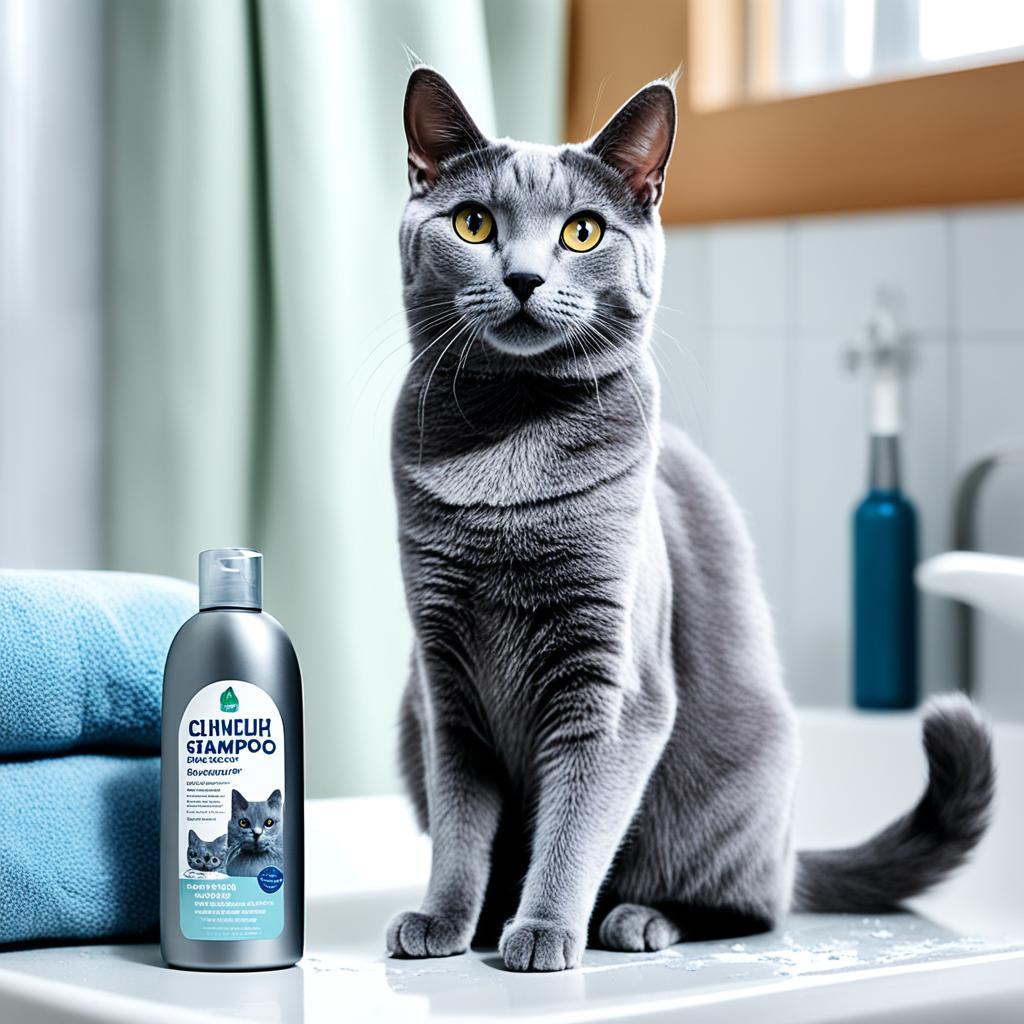
Taking care of your Russian Blue cat’s health can be tricky, especially when dandruff is involved. This issue isn’t just a cosmetic problem; it could also point to health troubles. Let’s explore how to handle dandruff in your cat and keep them healthy.
What is Dandruff?
Dandruff in cats looks like bigger skin cells mixed with skin oil, showing up as white flakes. You might see these flakes on your cat’s fur or on your clothes. It happens when the shedding of skin cells and oil gets too noticeable.
Dandruff vs. Dander
Dandruff and dander are not the same. Dander is the fine dead skin cells that all pets shed, but dandruff flakes are larger. Dandruff often comes with oily skin, showing a bigger skin issue.
Dealing with dandruff in Russian Blue cats means looking at different causes. Things like the environment, diet, and how often you groom your cat can lead to dandruff. It’s vital to manage these factors to help your cat’s health.
Why Does My Russian Blue Cat Have Dandruff?

Do you wonder why your Russian Blue cat has dandruff? We’ll explore the causes of these tiny white flakes on their fur.
Environmental Causes
Your cat’s skin can get dry because of where they live. Dry air or very cold weather can make Russian Blue cats prone to dandruff. It’s important to keep your home’s air moist and warm. This simple step can help your cat stay dandruff-free.
Dietary Deficiencies
What your cat eats affects their skin. If their food lacks vital nutrients, like omega-3s, they may develop dandruff. Adding quality food and supplements to their diet can improve their skin and coat. This is a great Russian Blue cat grooming tip!
Medical Conditions
Some health issues can cause your cat to have dandruff. Things like being overweight, allergies, or not moving much can make grooming hard. It’s crucial to visit the vet regularly. This way, any health problems can be found and treated early.
Common Causes of Russian Blue Cat Dandruff

Knowing why Russian Blue cats get dandruff helps you manage it better. Let’s look at the main reasons.
Obesity and Grooming Challenges
Being too heavy can make grooming hard for a Russian Blue cat. Because they can’t clean certain areas well, oil and dander pile up. This buildup causes those noticeable dandruff flakes.
Allergies and Sensitivities
Russian Blue cat dandruff causes also include allergies and sensitivities. These reactions might come from food or things in the environment, like pollen, dust, or some cleaning products. Skin issues, like flaking and itchiness, might happen because of these sensitivities.
To help, you can change the cat’s food, modify the living space, and stick to good grooming habits. It’s smart to talk to a vet too. They can find any hidden allergies or health issues that might worsen the dandruff.
| Cause | Description | Solution |
|---|---|---|
| Obesity | Hinders grooming, causing oil/dander buildup. | Weight management and regular grooming. |
| Allergies | Reactions to food or environmental factors. | Identify and eliminate allergens; consult vet. |
Diet and Russian Blue Cat Skin Health
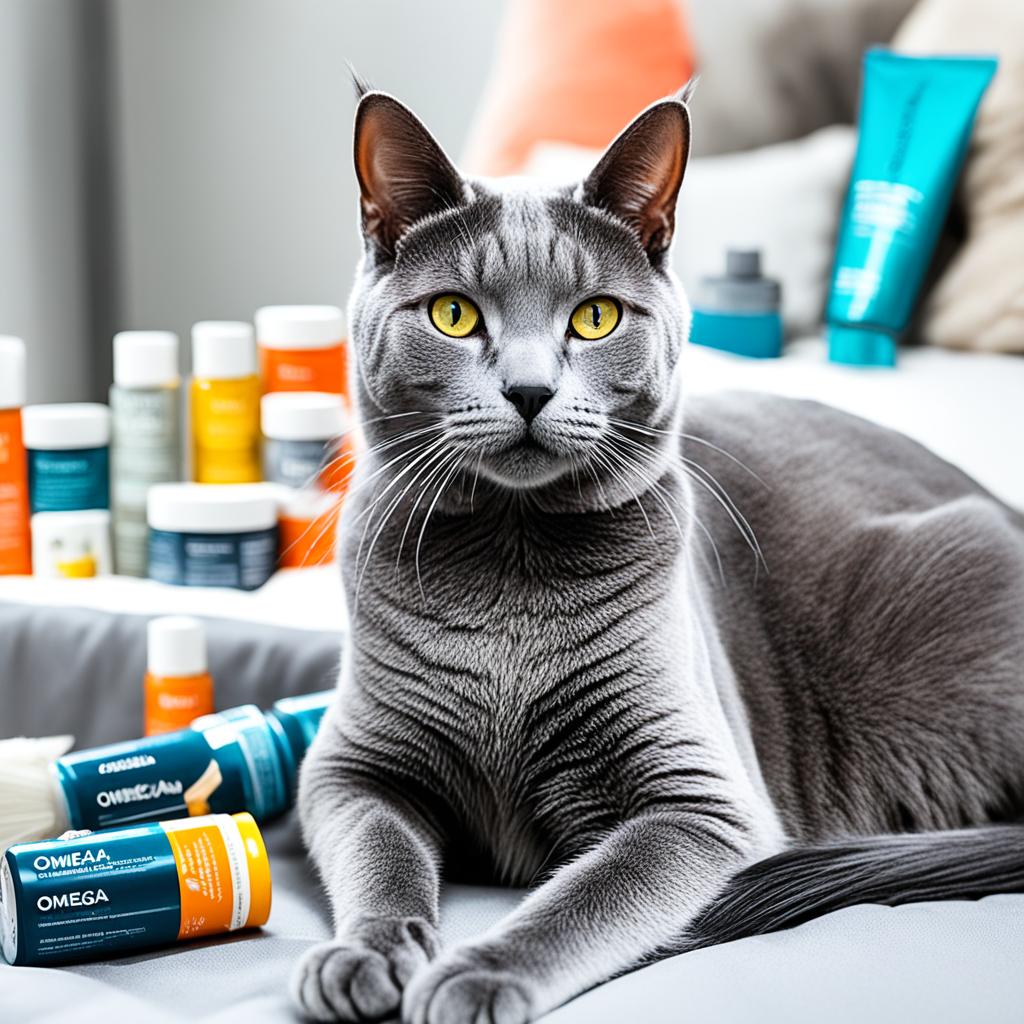
The best way to keep your Russian Blue cat’s skin healthy is through its diet. A good diet can stop dandruff from affecting them, a big issue for these cats.
Importance of Omega-3 Fatty Acids
Omega-3 fatty acids play a key role in keeping your cat’s skin well. These important fats, mainly from fish oils, help the skin stay moisturized and lessen swelling. Adding omega-3s to your cat’s meals fights dandruff effectively.
Best Diet for Preventing Dandruff
For stopping dandruff, a top-notch cat diet is essential. Pick foods rich in proteins, fats, and vital nutrients. Omega-3 supplements that are cat-friendly can also help a lot. Always talk to your vet before giving any supplements to your cat. This step is crucial to fight dandruff and keep the skin healthy.
Grooming Tips for Russian Blue Cats
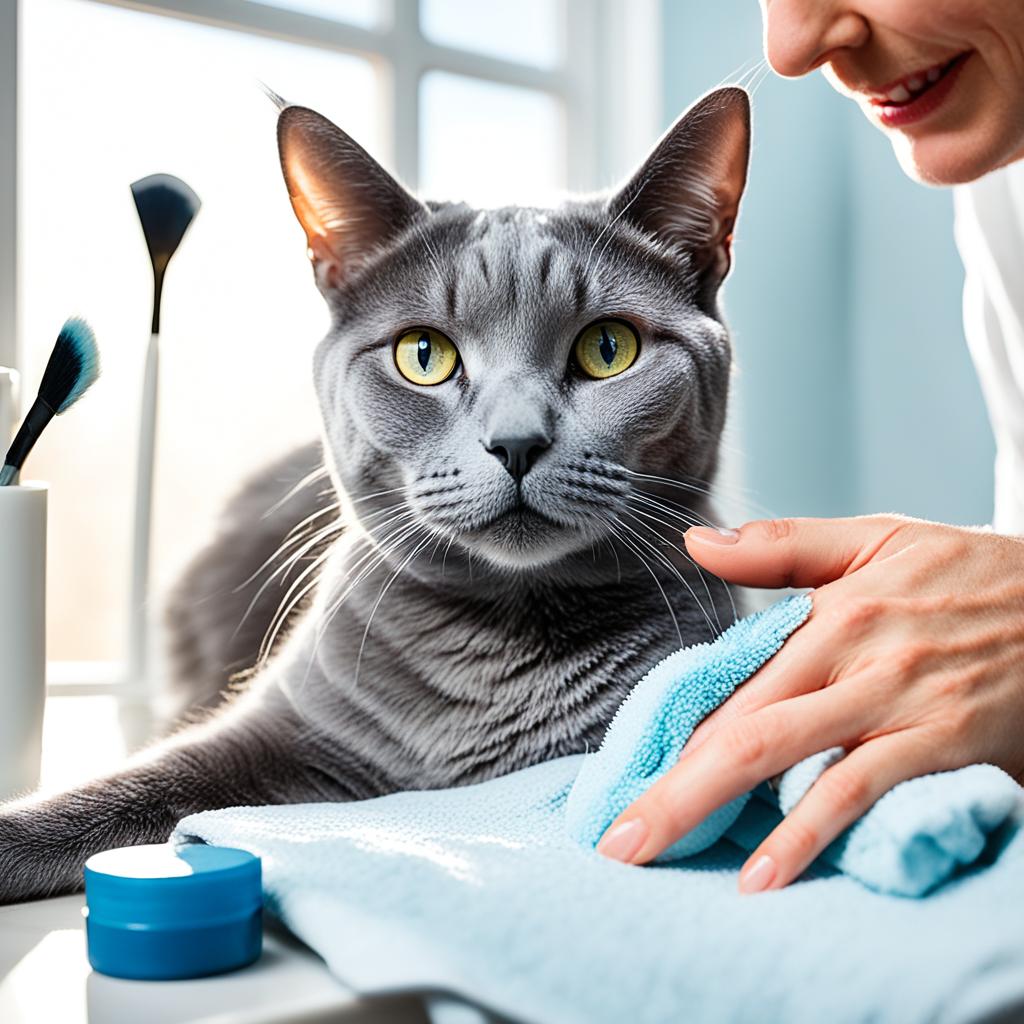
Russian Blue cats are known for their beautiful blue-gray coats and stunning green eyes. But, it’s not just about looks. Grooming keeps them healthy and happy.
Brushing Techniques
Regular brushing is a top grooming tip for Russian Blue cats. It helps get rid of dead skin and spreads oils in their fur. This makes their skin healthier. Use a soft-bristle brush or grooming mitt and brush gently with the hair.
Brushing this way keeps their coat glossy and cuts down on dandruff.
The Role of Bathing
Russian Blue cats usually keep themselves tidy. But, a bath every so often can help with dry skin. Use a shampoo made for cats with sensitive skin. But remember, too many baths can make dry skin worse. So, only give them a bath every month or two.
These grooming tips will help Russian Blue cats stay healthy and beautiful!
The Role of Hydration and Humidity

Keeping your Russian Blue cat hydrated is vital for their skin health. Water helps keep their skin soft and healthy, just like for us.
Hydration’s Impact on Skin
Make sure your cat drinks enough to prevent dandruff. Enough water keeps their skin elastic, reducing dryness and flakes. A water fountain can help since cats like moving water more than still.
Indoor Humidity Considerations
Humidity affects your cat’s skin too. Low indoor humidity can cause irritation and dandruff. Using a humidifier can keep the air at a level that is good for both your cat’s skin and overall health.
High water and proper humidity are key to good skin for your cat. By watching these factors, you can maintain your Russian Blue’s skin and fur in top shape. Keep the water fresh and the air humid to fight off dandruff!
Flea Control and Parasite Prevention

Taking care of your Russian Blue cat’s skin means keeping away fleas and mites. They cause problems like dandruff and itchiness. So, it’s vital to prevent these parasites from bothering your cat.
A good grooming routine should include methods to keep fleas and mites off your cat.
Cheyletiella Mites (Walking Dandruff)
Cheyletiella mites are called “walking dandruff” because they make your cat’s skin flake. They are on the surface and can really irritate the skin causing itching. Keeping them away means using the right tools and medications, like flea combs and proper shampoos. Your vet can also give you the best advice.
Flea Allergies
If your cat is allergic to fleas, it’s a big problem. Flea bites can lead to severe itching and more dandruff. To avoid this, regularly apply spot-on treatments and give oral medications. Also, make sure your cat’s living space is always clean. This will help stop fleas and mites from becoming a big issue.
Here’s a quick checklist for keeping your Russian Blue free from fleas and mites:
- Regular vet check-ups
- Use of flea combs
- Administering prescribed anti-mite shampoos
- Scheduled flea and mite treatments
- Maintaining a clean home environment
| Prevention Technique | Benefits |
|---|---|
| Flea Combs | Remove visible fleas and mites, reduce flaking. |
| Anti-mite Shampoos | Target and eliminate mites causing “walking dandruff.” |
| Spot-on Treatments | Long-term flea and mite protection. |
| Oral Medications | Effective, systemic prevention against parasites. |
| Clean Environment | Reduces the risk of reinfestation. |
Treating Dandruff in Russian Blue Cats

Dandruff in Russian Blue cats has many causes. These include the environment, diet, or health issues. It’s key to use both vet advice and at-home tips to help.
Consulting a Veterinarian
Start by talking to your vet about your cat’s dandruff. They can uncover allergies, parasites, or skin problems. Some cases need special care. If dandruff comes with itching or sores, vets can best help.
Home Treatments
Home care can also ease dandruff. Brush your cat often to remove skin and spread oils. Adding omega-3 to their diet boosts their skin and lessens flakes. But always check with your vet before changing the food too much.
| Home Treatments | Benefits |
|---|---|
| Regular Brushing | Removes dead skin cells, distributes natural oils |
| Improved Diet | Enhances skin health, reduces dandruff |
| Omega-3 Supplements | Supports overall skin condition |
Home remedies can work well. But, if issues persist, seeing a vet is wise to check for serious problems.
Preventing Dandruff in Russian Blue Cats
To keep your Russian Blue cat’s coat shiny and dandruff-free, you need to groom them well and feed them the right food. Taking care of dandruff early can help both you and your cat. You’ll avoid discomfort in the long run. Learn how to keep their skin healthy.
Regular Grooming Routine
Grooming is vital, not just for looks, but for the cat’s skin. Regular brushing removes dead skin, spreads oils, and lessens dandruff. Try brushing your Russian Blue once a week with a top-notch brush for short hair. This effort helps prevent dandruff and keeps the coat smooth and shiny.
High-Quality Nutrition
A balanced diet with omega-3s is key to stopping dandruff in Russian Blue cats. Quality cat food gives them vitamins and minerals for skin health. Think about adding foods made for skin or ask your vet about supplements. These foods keep the skin hydrated and elastic, reducing dandruff chances.
FAQ
What causes dandruff in Russian Blue cats?
Various reasons lead to dandruff in Russian Blues. These include obesity, illnesses, and not grooming well due to discomfort. Dandruff can also happen because of allergies or parasites like cheyletiella mites. Things in their environment and not getting the right nutrients may also be culprits.
How can I differentiate dandruff from dander in my Russian Blue cat?
**Dandruff** looks like visible flakes due to bigger skin cells mixed with oil. **Dander** is made of smaller cells and is hard to see unless you use a microscope. Without one, the difference can be hard to spot.
What role does diet play in managing my Russian Blue cat’s dandruff?
Nutrition affects a cat’s skin a lot. To avoid dandruff, they need diets full of omega-3 fatty acids and essential oils. A healthy, nutrient-rich diet will keep their skin from becoming too dry and flaky.
How often should I groom my Russian Blue cat to prevent dandruff?
**Grooming often** is a must to lower dandruff. Regular brushing removes dead skin and spreads natural body oils. Plan to brush your cat a few times each week to keep their skin healthy.
Can environmental factors affect my Russian Blue cat’s skin health?
**Environments** with low humidity might cause skin to dry out. It is essential to keep indoor air moist for your cat’s skin. Also, make sure they drink enough water to stay hydrated, which is good for their skin.
What are the common allergens that might cause dandruff in Russian Blue cats?
**Allergies** can be triggered by certain foods, pollen, dust, and even flea bites. These can cause skin to inflame and lead to more dandruff.
Are there home remedies to treat dandruff in Russian Blue cats?
Home remedies include more omega-3 fatty acids in their diet, regular brushing, and keeping the air moist. But, if dandruff keeps coming back, it’s best to see a vet for more advice.
How important is hydration for my Russian Blue cat’s skin?
Hydration is key for their skin’s health and elasticity. Dry air at home can make dandruff worse. Using a humidifier in dry weather might help with this issue.
What parasites should I watch for that may cause dandruff in my cat?
Look out for cheyletiella mites and fleas as they can lead to dandruff. It’s crucial to prevent these parasites to keep your cat’s skin and fur healthy.
When should I consult a veterinarian regarding my cat’s dandruff?
If dandruff continues despite your efforts, or if you notice signs like itchiness or changes in eating, see a vet. They can provide a full check and advice on a treatment plan.


